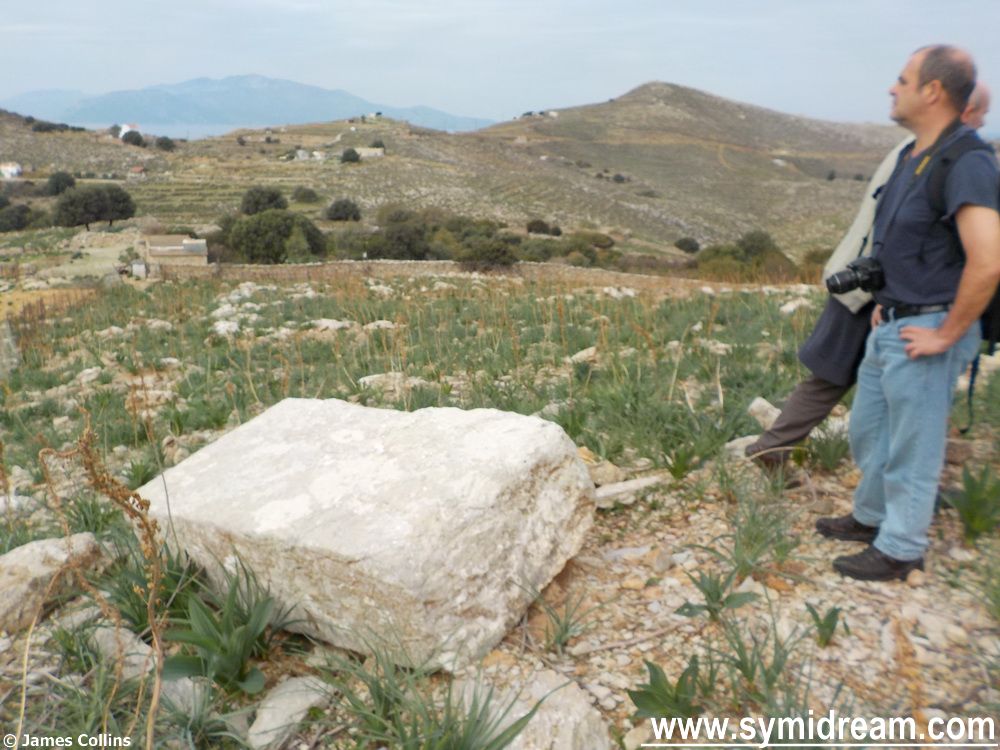
Coming down the hillside, to where we will join that riverbed, we came across a strange stone. One huge slab of white rock that has been dressed, you can see chisel marks in it, very worn so probably very old. Thing is, this rock must weigh a couple of tonnes and it is not the same rock as thereabouts; it had been brought here at some point, and for some reason. There is evidence around that the area may have been occupied; some straight edges to some of the ground rocks (or could that be coincidence?) and certainly some large ruined buildings including another windmill – lower down the ridge fromt the Roukouniotis windmill. So, the question is, what was this stone used for?
Photographing a ‘monk’s cowl’ apparentlyOur guesses ranged from a sacrificial altar, through a grave marker, to a chart table, which is what we used it as we laid out the map to see if it was marked as an historic monument. It wasn’t. [Later that evening, I asked Sotiris at the supermarket if he had any ideas, as I know he has land and farms out that way. He told me it was a sacrificial altar, and laughed. He had no idea either. So, if you know, please put answers on a postcard and email them to me. Ta.]
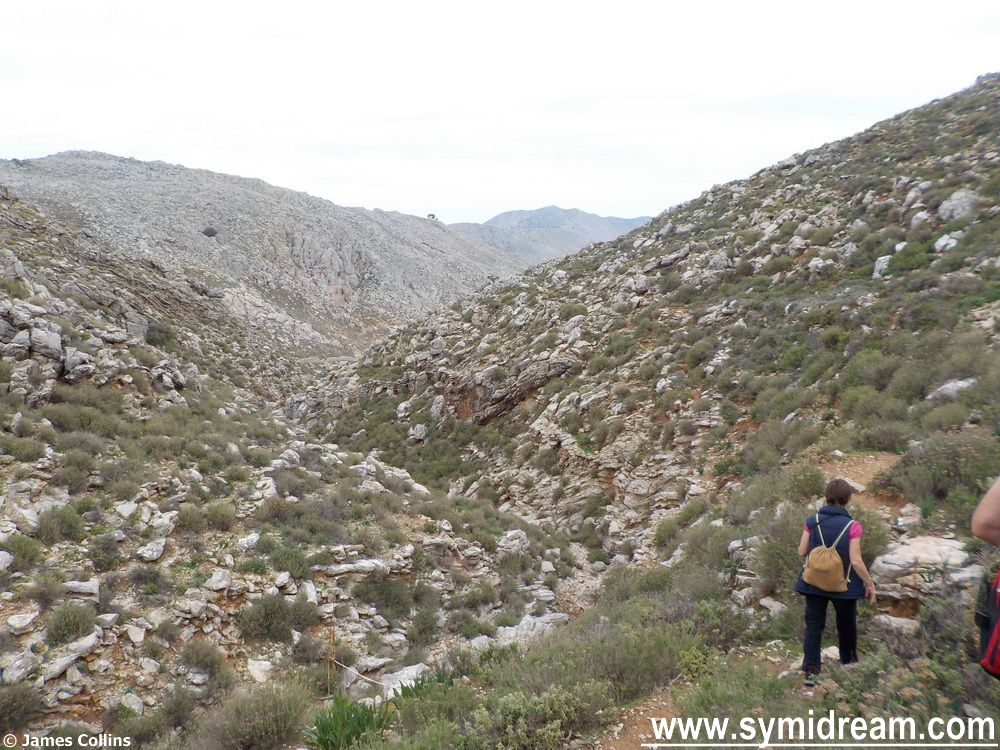
Following the riverbed (as was) opposite the ’12 caves’
Back to the walk. From Aslan’s Table (my name for it) we headed across the hillside and over a wall, getting in a nice but mild bit of rock climbing, and then skirted along the edge of the riverbed, high up, traversing a dodgy part at one point with only a flimsy metal fence to cling to if we should slip – more rock climbing, brought back fond memories of my days in harness and ropes (but that’s another story) and almost gave me the bug back, and the vertigo was not an issue. And onwards…
Now, if you are following this on a map, we are opposite the ancient landmark of 12 ΣΠΗΛΙΑ, or 12 Caves, of which there was not sight or sound. But talking of sound, here’s a little video where you can hear what the walk was like after we’d met the ponies and just after Aslan’s Table.
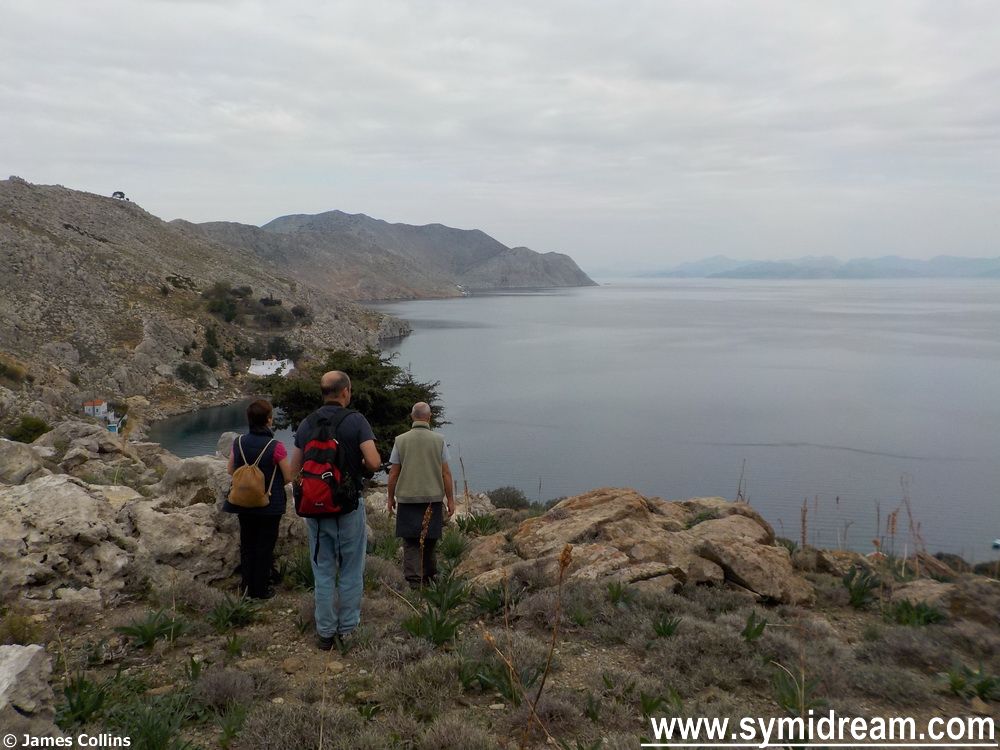
They are goat bells you hear; a whole herd was coming down that hillside you can see in the middle distance. I’d provide you with the smell of wild oregano and sage (took some home) if I could, but that’s not yet possible on a WordPress blog. So, onwards past the invisible Spilia, and now we round a corner where we can see the sea and Nimborio.
About to go down to Nimborio
And that’s for tomorrow when we find catacombs, mosaics and a glass of wine.
Today we start a walk, our second long walk of the winter walking season, and this takes us (well, me) through some places I have not been before.
It starts off in Horio and the church of Stavros from where we collect our walking companions and head off towards the old track from the village towards the hinterland. There’s a new-new sign just past the gate now directing you to Panormitis one way and Ksisos the other. We followed the path towards Ksisos and then turned off it having visited Agia Pareskevi where I had a quick word about eyesight (she’s the saint of eyes).
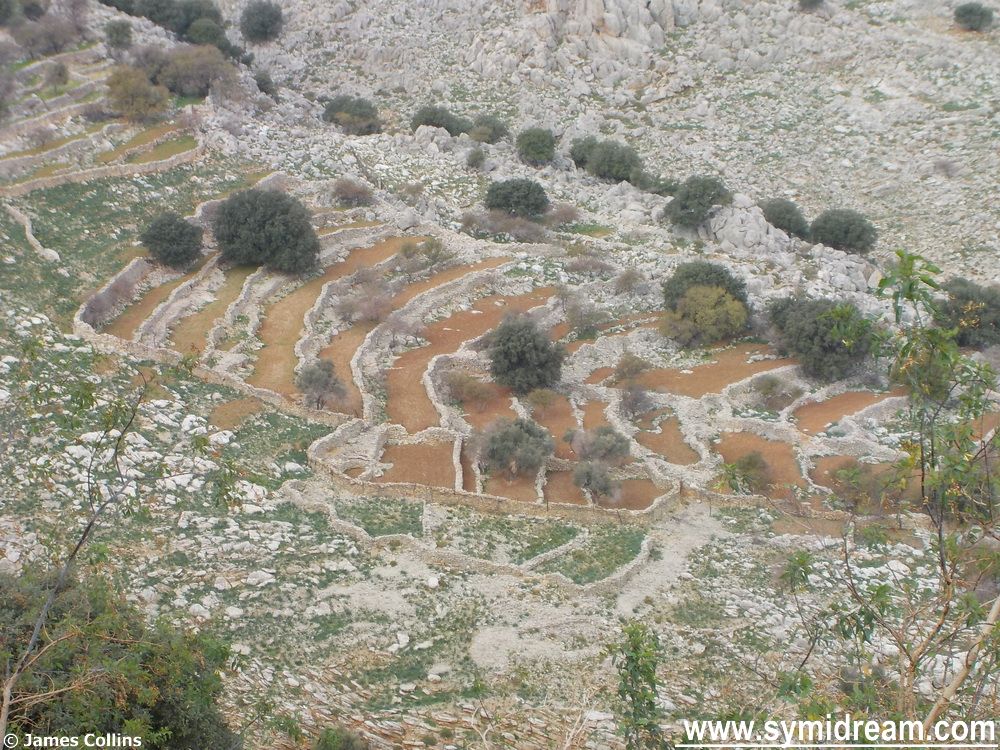
Terracing ready for planting, or already planted
According to my map, this sub-path (which is not marked on it) leads us past ‘Teixos’ which means ‘Wall’ and that is listed as an ancient monument, but I think the map reefers to me. Having said that, there are many walls out there, so much terracing and it’s so hard to put a date on them. I can vaguely recognise Byzantine masonry, and more modern building works, but dry stone walls that could have been put up last year or 1,000 years ago are hard to date. We did see some terracing though, weeded out and ready for planting fodder for livestock, apparently.
There’s always one – and the bus is in the wrong place!
And so, on across the side of the valley behind Yialos, below the main road, and through a line of trees, and over some very rough ground. Grateful for my new walking boots which stood up well to the day and didn’t provide blisters.
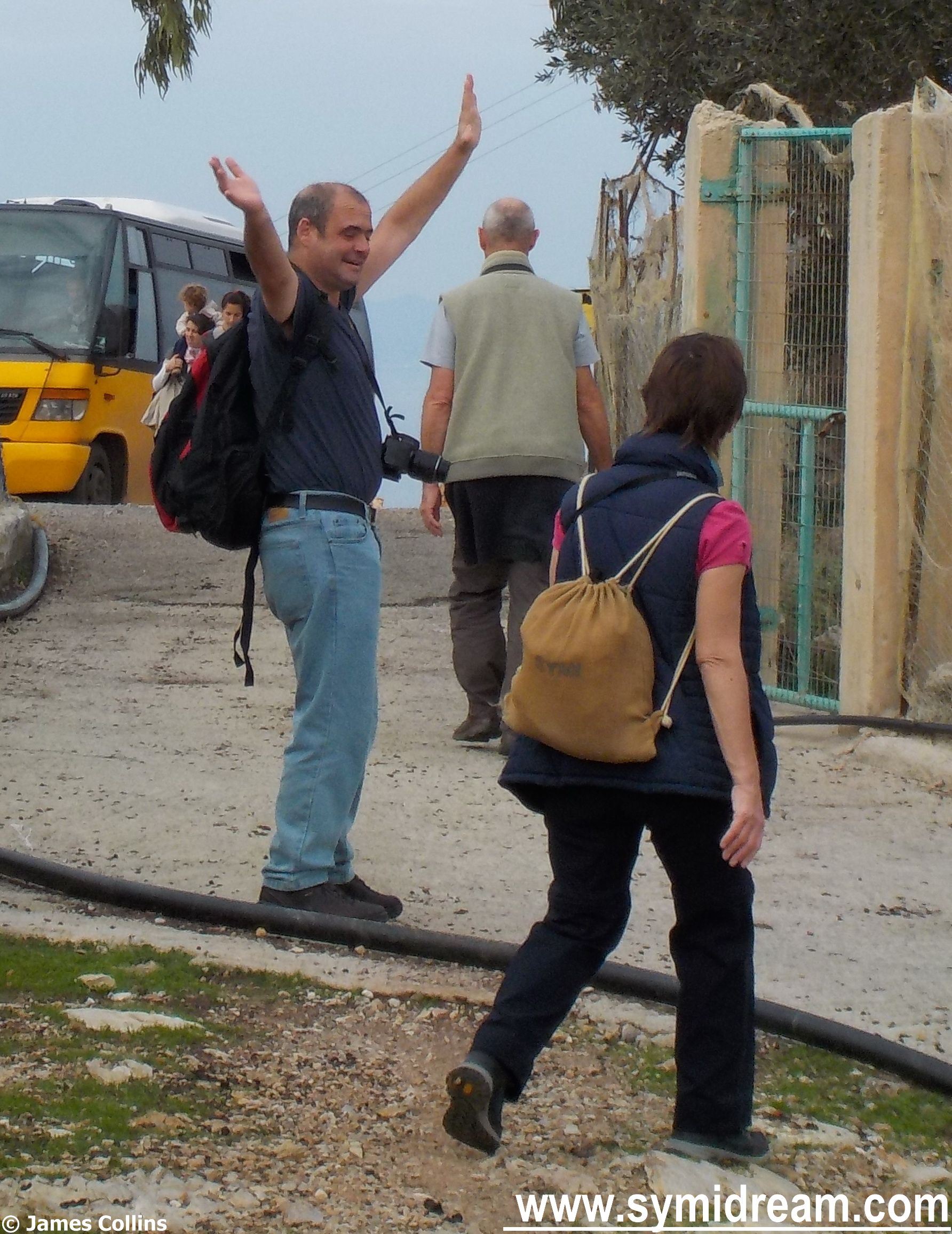
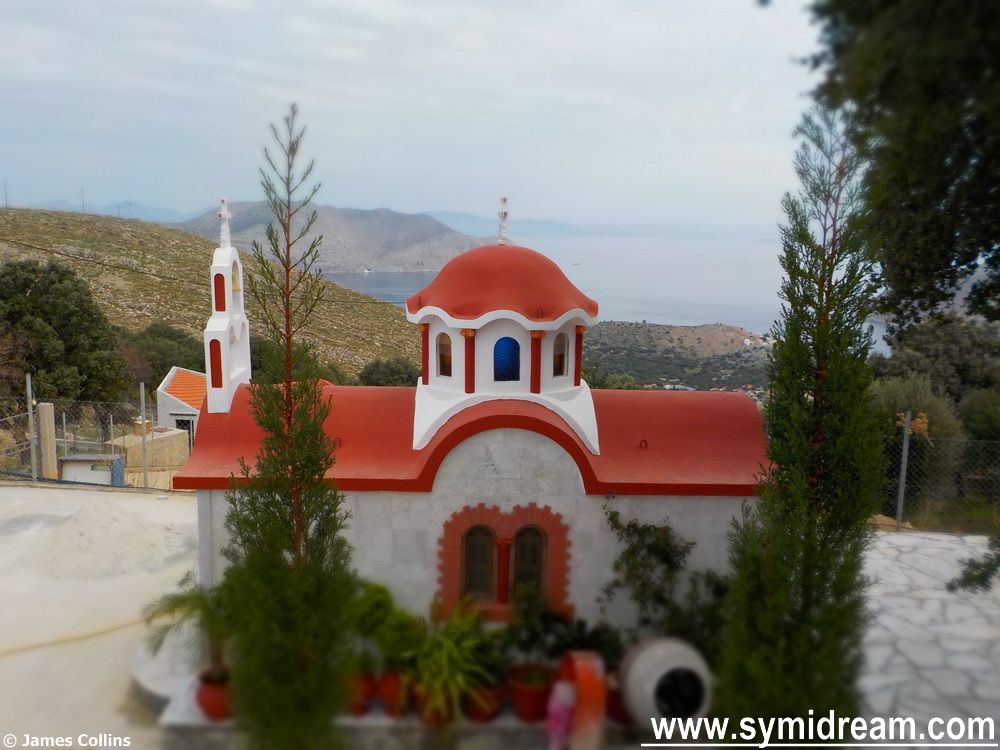
We came out in the area around Agios Fanouris where the pre-fab church lives now, and there, coming up to the main road, saw the Symi bus drive past. I’ve never seen it up there before and can only assume it was coming back from Roukouniotis or the army camp. It was St Andrew’s day on the day we were walking so perhaps there had been something going on. Anyway, Neil was happy to be on a flat surface again, as you can see, though Justine looks like she’l making a safe way around him as if to avoid.
The church that arrived on the back of a lorry
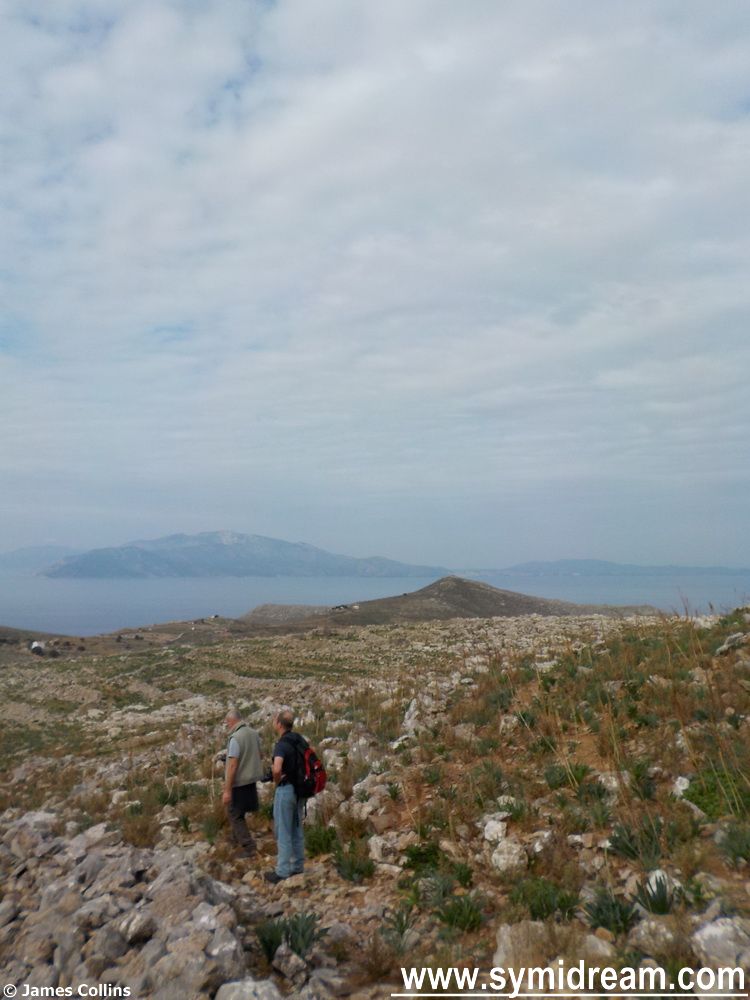
Carrying on down the main road for a while we then stopped to have our photo taken at the ‘no photos’ sign and then took a right, following the red dots towards the area marked on the map as… (takes a look), well, actually there isn’t anything marked on the map, and the red dots ran out too. To our left and down is the area known as Kato Meria (Kate O’Mara as it was called by one of our party), and the church Panagia Katholiki. Further across and up was the famous landmark of ‘Michaelis’ barbeque’ and beyond that the church of Ag. Dimitrios (one of them). Between us and all that is a huge field of boulders and rocks, wild herbs, and a dry riverbed which then leads all the way down to the back of Nimborio.
Walking through the Kato Meria area of Symi – it’s a big landscape out there
That’s for tomorrow, as is the tale of the sacrificial altar, or Aslan’s Table…
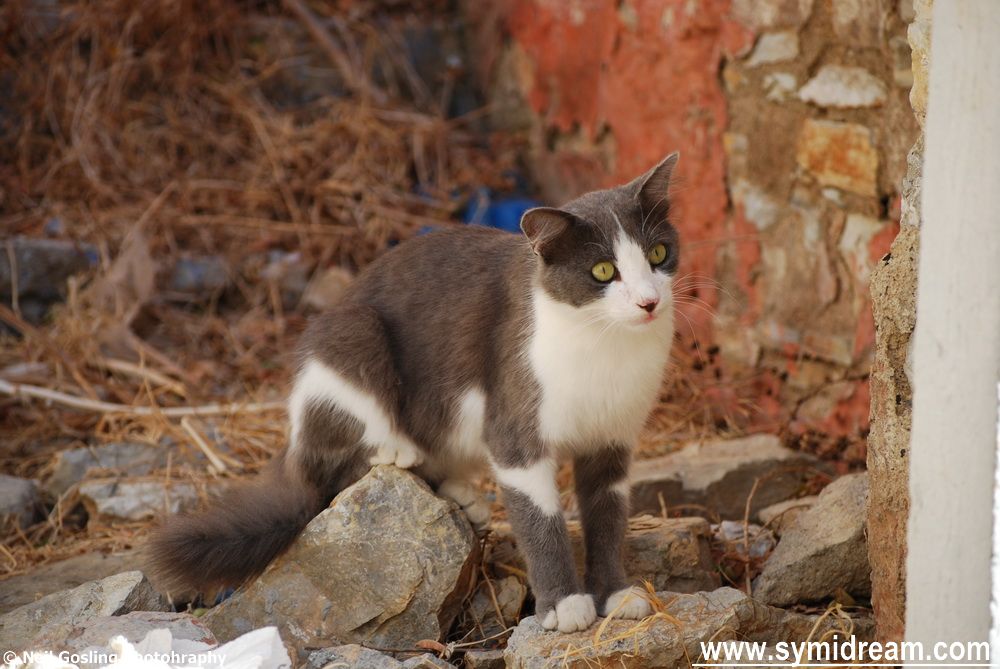
Today’s post is given over to a message from Symi Animal Welfare, the island’s only animal charity operating at the moment.
This chap looks a bit surprised. Perhaps some things have just gone missing.
“Words can’t describe the last few hectic days on Symi when a visiting Australian vet neutered 74 cats. A simple ‘Thank you’ to so many people just isn’t enough to express our gratitude to everyone involved during the last week! Volunteers collected cats from virtually every area of the island, some brought 1 or 2, others brought 9 or 10. Yvette Berkeley the vet & Tove (whose house was used as a ‘surgery’) along with a team of volunteers, worked flat out from before 9am until late afternoon for 4 and a half days, the results are staggering – 51 females + 23 males were neutered!
Carol from the Nine Lives charity who chiefly-sponsored this programme was concerned that we wouldn’t find sufficient cats, especially after 115 were neutered on Kefalonia the previous week, however, she is so delighted with everyone’s hard work & the final tally that she has already suggested another visit at the same time next year!
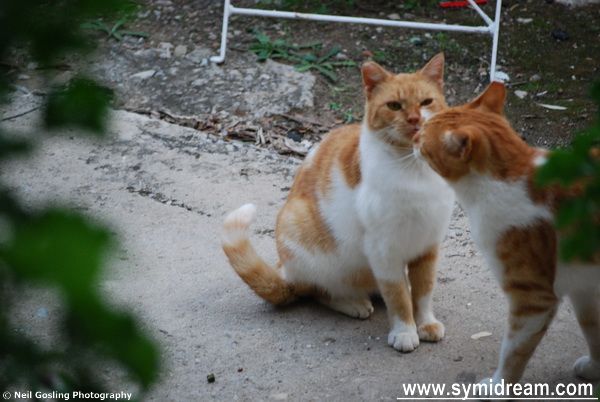
Nimborio cats
Walking from the village, down the Kali Strata into Yialos earlier, I’m sure I saw several cats with newly-clipped ears wink as much as to say ‘thank you’………..or maybe it was my ‘pleased as punch’ feeling after an exhausting week?
This report is from all of the Symi Animal Welfare team, each have served such an important role in ensuring this visit would be such a success, your immense enthusiasm has been fantastic. The same goes for an increased number of volunteers, a few who have never been involved with vet-week before, so ‘well done’ each & every one of you.
Keeping the Symi stray cat population healthy – bravo!
I had planned on announcing my retirement (after nearly 10 years being secretary) as the programme finished, however, this amazing team-effort has been an inspiration & proved to all of us just much can be achieved if we pull out all the stops, so I’ll be staying on if that’s okay?
A final message to our wonderful supporters – your generous donations have again helped us look after the welfare of Symi’s cats……. ‘Yamas!’
Bless you all, Melanie, Tove, Suzan, Claudia & Hazel”
Kalo mina, happy month! On Saturday, after weeding the garden a bit and cutting back the vine a lot, and after burning it all off and also the other stuff that’s been lying around all summer, and after assuring our concerned neighbour that we were okay and the house wasn’t on fire (very kind of him to worry about us, makes you feel a bit safer), and after (probably) annoying the other neighbours with the smoke and airborne burnt bits, and after lunch was done and an old episode of Lovejoy had been watched, I decided to see if I could find my great-grandmother’s grave in Devon. As you do.
Calm harbour
I’d actually been to the churchyard, back in 2010, and I’d looked at all the graves there, or so I thought, but hadn’t seen one for Kate Scott. I later found out that she definitely was buried there, in Crediton, Devon, this is, and I’ve even seen the press cutting that described her funeral. It was seeing a church on the Lovejoy episode that set my mind to it, I guess.
Reflections
I remembered that I had seen a website where interested people with very little else to do had been around photographing graves across the country and posting up results. I wondered if by any chance anyone had done Crediton. Sadly not it seems, so I started looking around for other sources which might help unlock the great Scott mystery, as it’s been called. (For more on this subject and if you fancy joining in, you can see the work I did on it a few years back at this link: https://symidream.com/scott/evidence.html)
Sunrise cafe on a Saturday afternoon
So, if you live near Crediton and have nothing to do for a few hours and fancy a graveyard walk, perhaps you could look for her while you are there, and take a photo for me. Of the headstone I mean, I don’t want you going round digging anything up. She was Kate Scott (nee Maxwell) and was buried there in 1940. It’s a very nice churchyard to walk around, honest.
Kate Scott
While I was in the area that time, I also walked around Sandford churchyard, as the Scotts lived nearby, at Priorton Mill. I did see one Scott headstone in Sandford, strangely, but not for the famliy I was looking for. I also went to look in Honiton where her husband, the elusive Arthur Henry Scott was buried in 1942, but couldn’t locate his grave either. I’m not very good at this game really.
Disembarking from the Dodecanese Express in the winter
Anyway, while looking around to see if there was any kind of list of graves or even photos on any other sites, I found this About Crediton church organ. It made me smile and it’s not made up. I thought I would share with you:
“The War Memorial Organ was designed based on plans drawn by the church’s organist Lieutenant Harold Organ FRCO in 1915. Organ was killed in action in 1917 but the plans were continued by Cyril Church…”
Takis working on his latest and biggest art-on-leather project
What are the chancels eh? Aisle bet you the current organist is one who can’t play c sharps? A Mrs D Flat, per-apse? Wouldn’t that be swell? No, I’ll stop now, I don’t want to bombarde you with a mixture of church organ related puns, that would be too rank.
Later on, I was distracted by Lugnabana, a townland in Co. Leitrim, Ireland, that no longer exists. It did exist in 1834 when another great-great ancestor of mine walked from there to Durham looking for work and I wondered if any other information about it had come online since my last search a couple of years ago. I ‘Googled’ ‘Lugnabana, Ireland’ and Giggle (sic), in all its wisdom, asked me if I was sure I’d meant to ask for Lugnabana and suggested, perhaps, that in my idiocy of not knowing what I was looking for, I had meant to ask for ‘Log Cabin Ireland’ or even ‘Rugby Ireland’? Certainly not. Who would want to find a log cabin in Ireland?
Invictus
Actually that sounds like a rather interesting idea, and if it had suggested Rugby team… But I digress and will do so again before I go. We recently watched a film called ‘Invictus’ about the South African rugby team winning the world cup in the first year of Nelson Mandela’s presidency. I don’t know how accurate a film it was, but we liked it. So, if you’ve not seen it, it’s today’s recommended purchase.
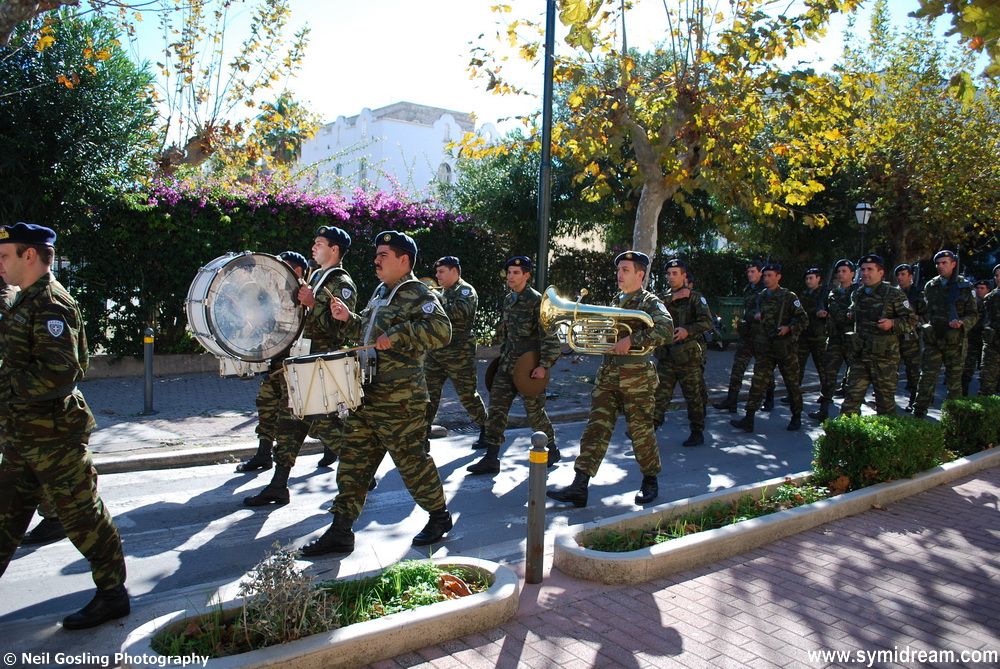
Some photos from Kos in November (‘cos I got up late). As usual, click the photo for the full sized version, then back button back to this page. Must try and find a widget plugin thing that runs a slideshow of photos in a post… And ideas Allan?
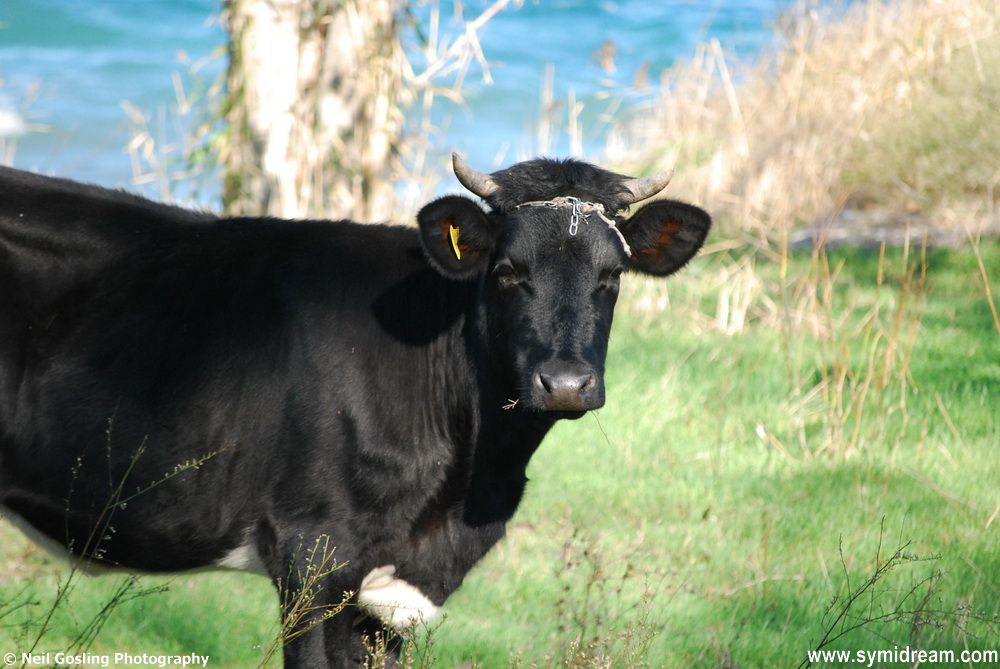
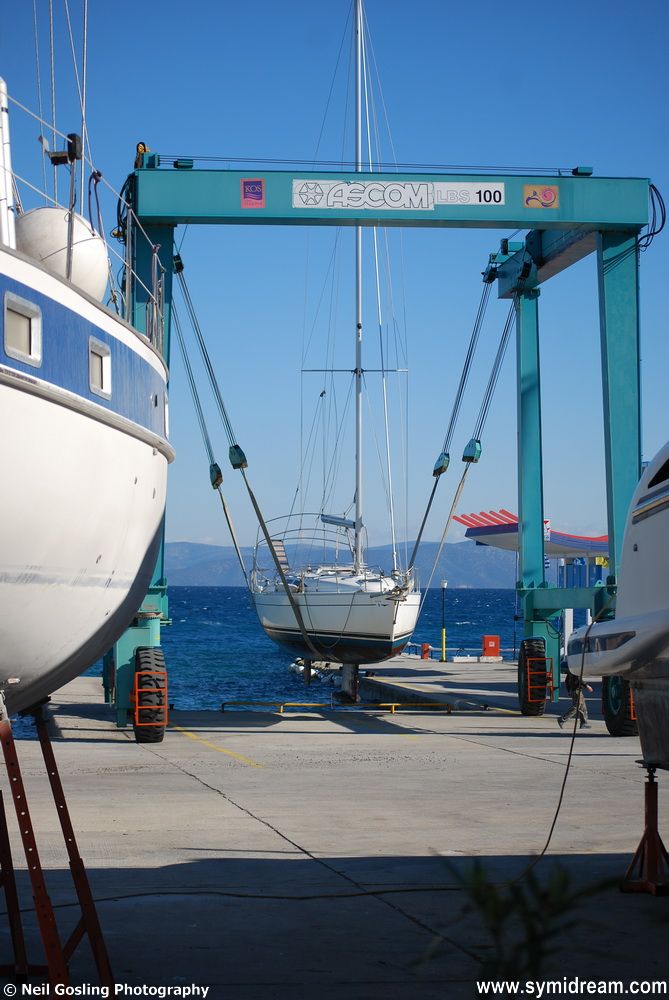
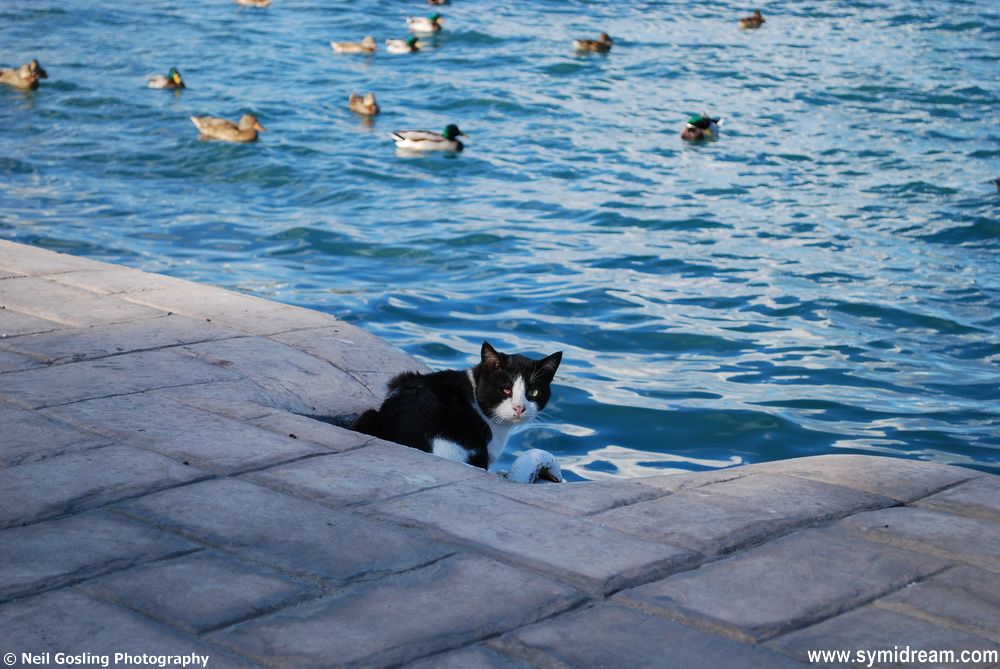
Fishermen, after the catchFound a friendAh, if only it were openHippie cow Batman!So that’s how you get a boat out of the waterJust happened to be passingWhat you looking at?And how may I be of assistance to you today sir?
![Coming down the hillside, to where we will join that riverbed, we came across a strange stone. One huge slab of white rock that has been dressed, you can see chisel marks in it, very worn so probably very old. Thing is, this rock must weigh a couple of tonnes and it is not the same rock as thereabouts; it had been brought here at some point, and for some reason. There is evidence around that the area may have been occupied; some straight edges to some of the ground rocks (or could that be coincidence?) and certainly some large ruined buildings including another windmill – lower down the ridge fromt the Roukouniotis windmill. So, the question is, what was this stone used for? Our guesses ranged from a sacrificial altar, through a grave marker, to a chart table, which is what we used it as we laid out the map to see if it was marked as an historic monument. It wasn't. [Later that evening, I asked Sotiris at the supermarket if he had any ideas, as I know he has land and farms out that way. He told me it was a sacrificial altar, and laughed. He had no idea either. So, if you know, please put answers on a postcard and email them to me. Ta.] Back to the walk. From Aslan’s Table (my name for it) we headed across the hillside and over a wall, getting in a nice but mild bit of rock climbing, and then skirted along the edge of the riverbed, high up, traversing a dodgy part at one point with only a flimsy metal fence to cling to if we should slip – more rock climbing, brought back fond memories of my days in harness and ropes (but that’s another story) and almost gave me the bug back, and the vertigo was not an issue. And onwards… Now, if you are following this on a map, we are opposite the ancient landmark of 12 ΣΠΗΛΙΑ, or 12 Caves, of which there was not sight or sound. But talking of sound, here’s a little video where you can hear what the walk was like after we’d met the ponies and just after Aslan’s Table. They are goat bells you hear; a whole herd was coming down that hillside you can see in the middle distance. I’d provide you with the smell of wild oregano and sage (took some home) if I could, but that's not yet possible on a WordPress blog. So, onwards past the invisible Spilia, and now we round a corner where we can see the sea and Nimborio. And that’s for tomorrow when we find catacombs, mosaics and a glass of wine.](https://symidream.com/wp-content/uploads/2014/12/Walking-through-the-Kato-Meria-are-of-Symi-22.jpg)