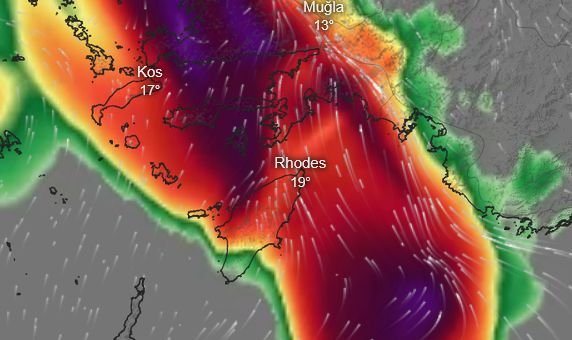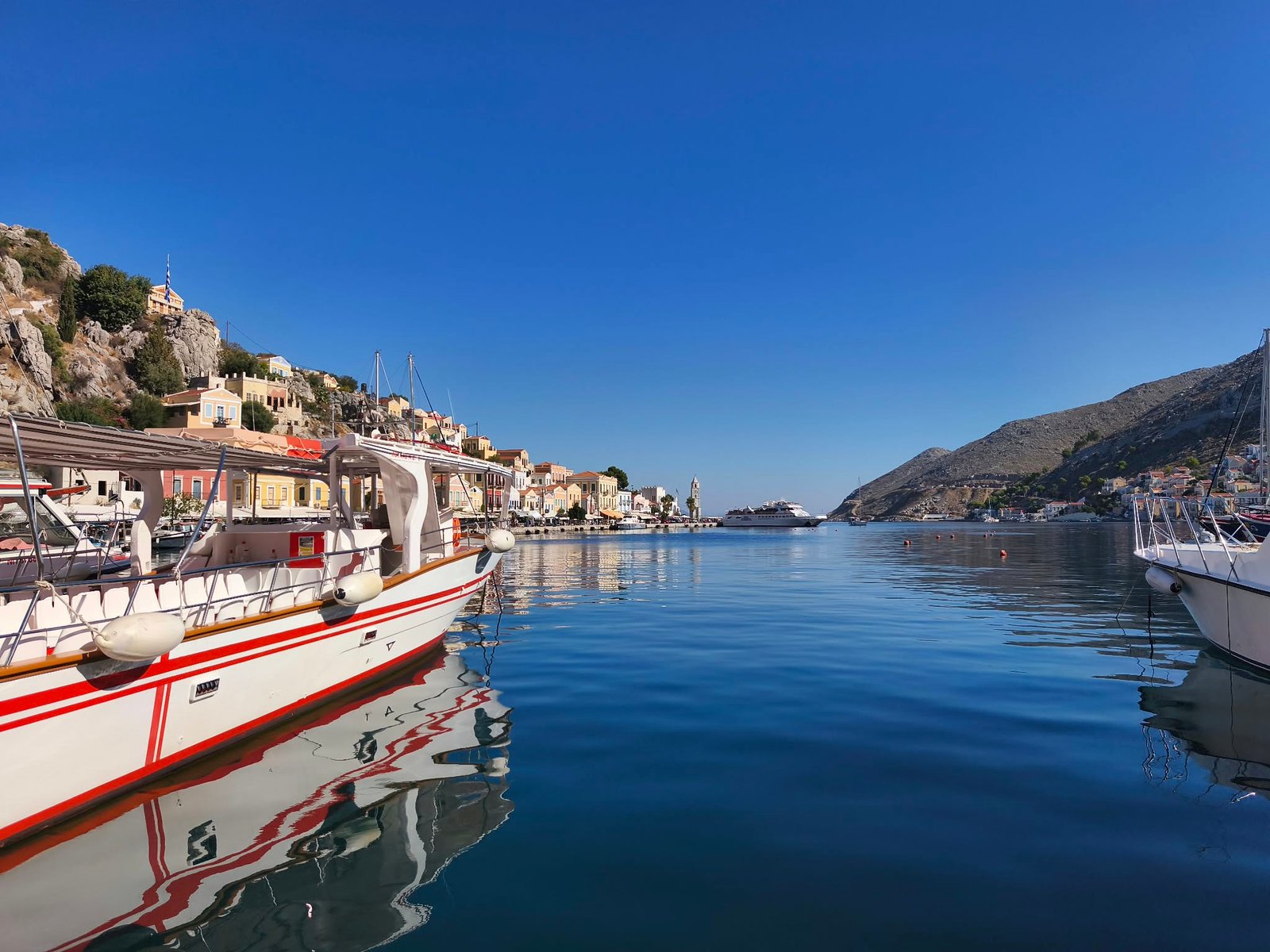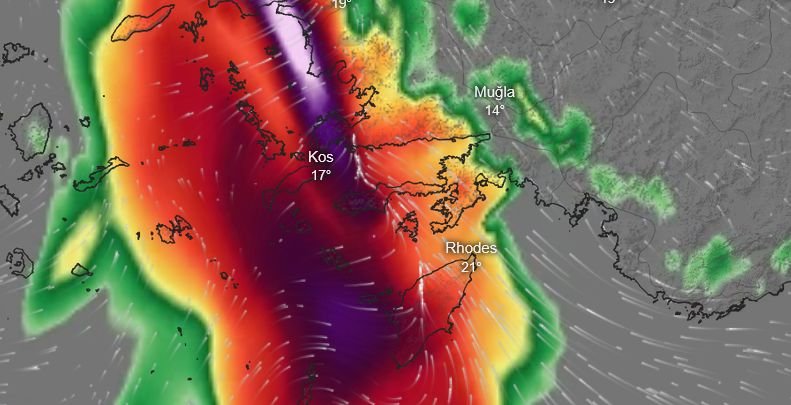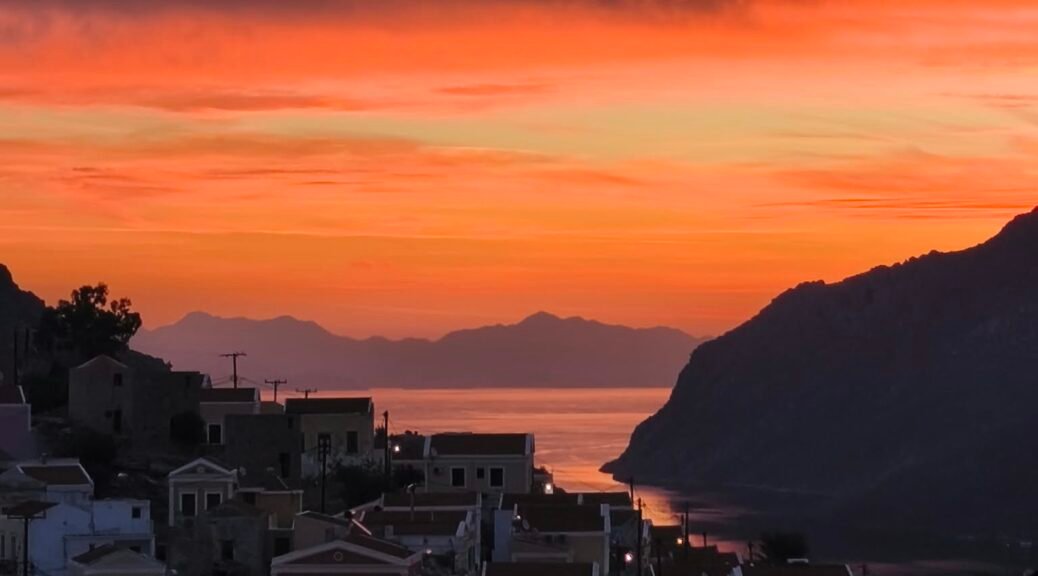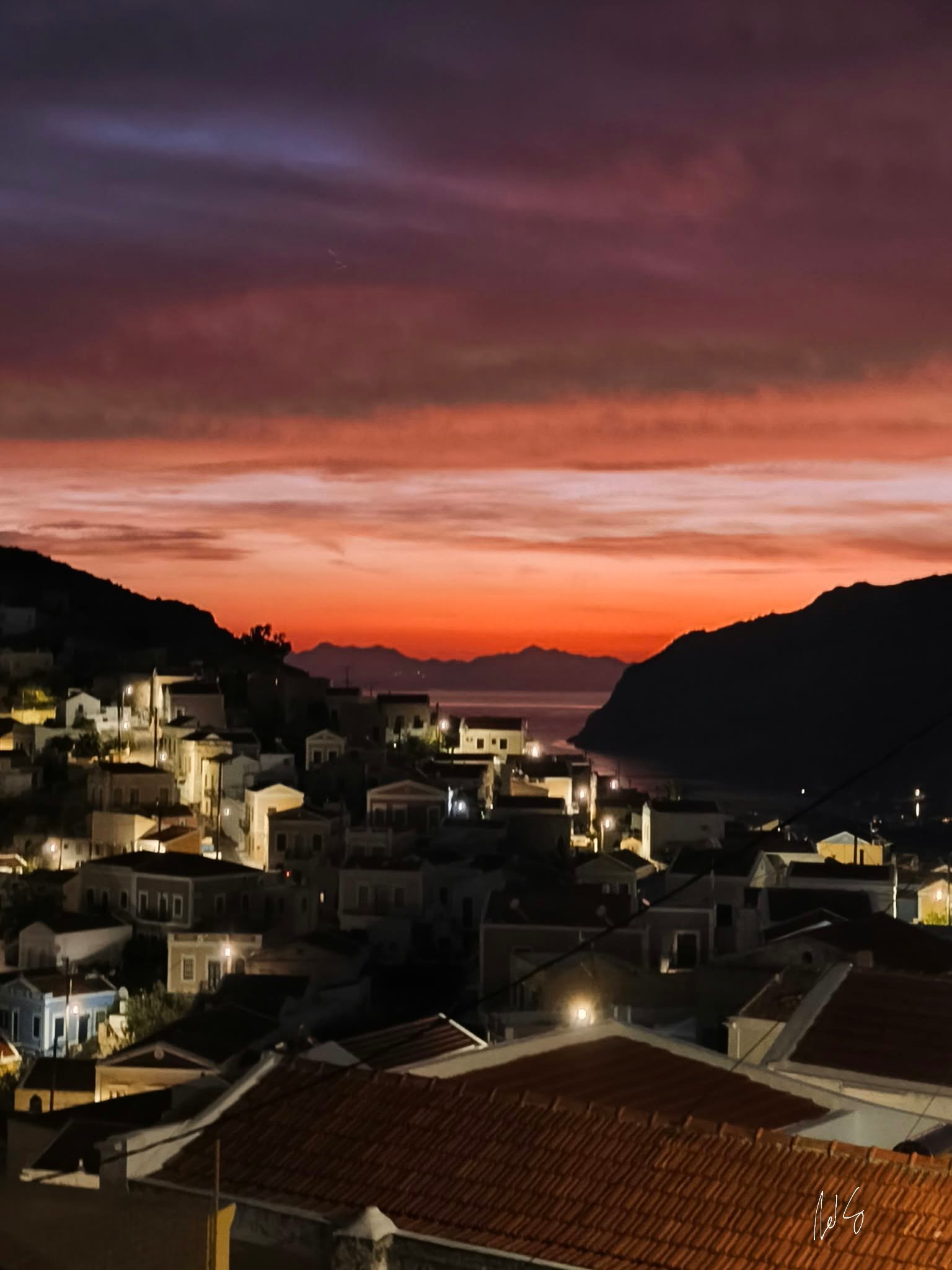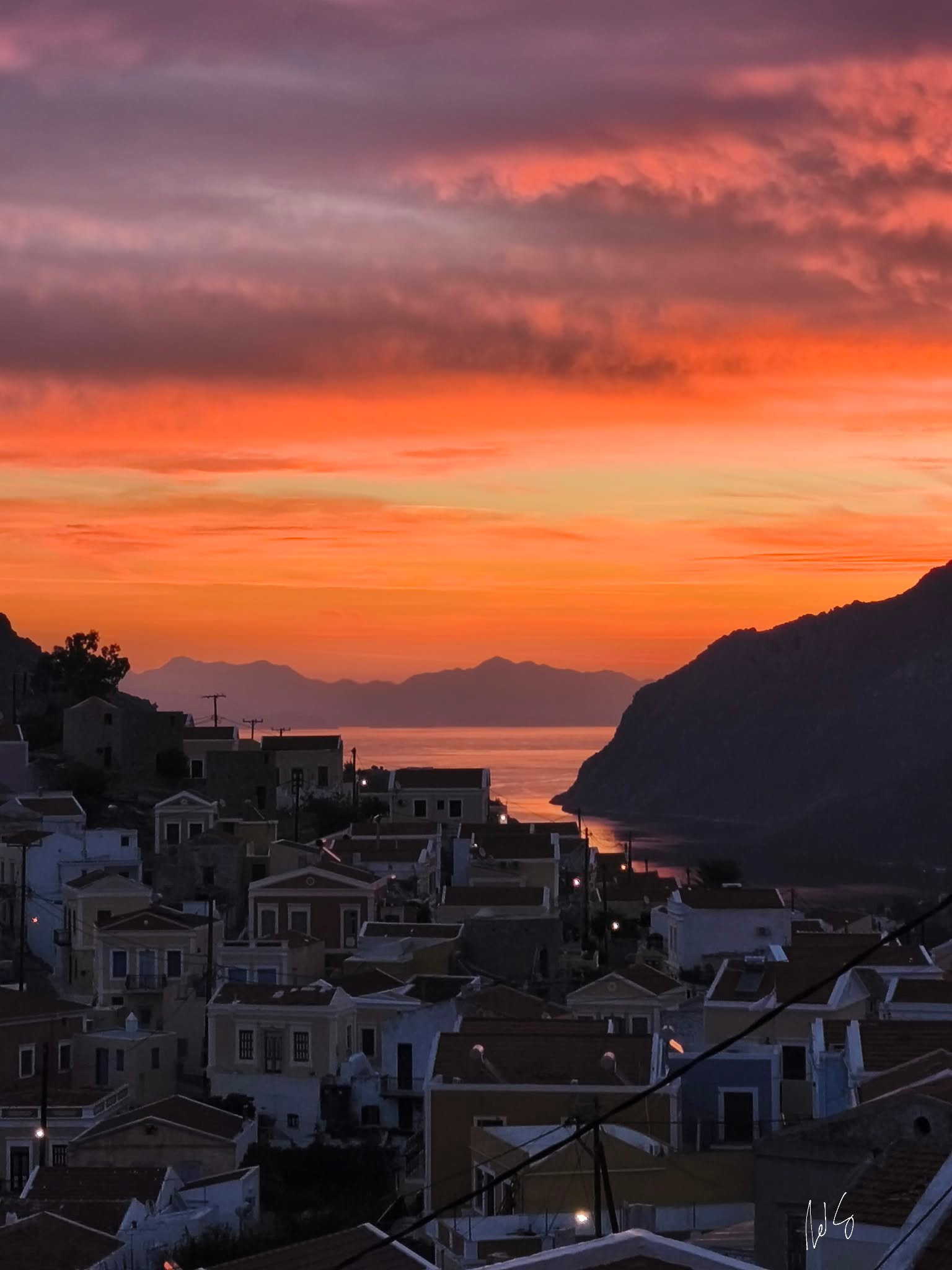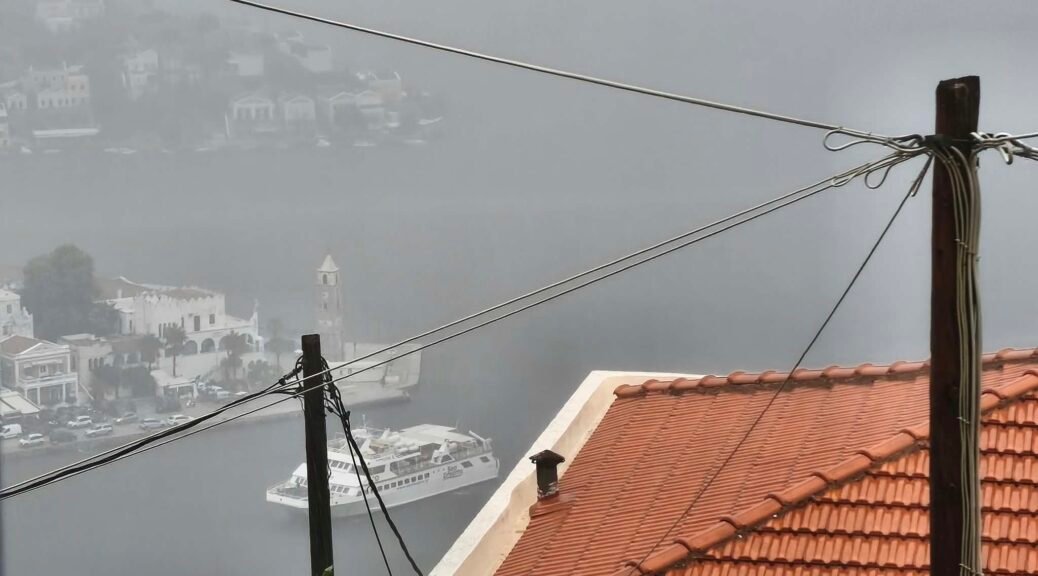
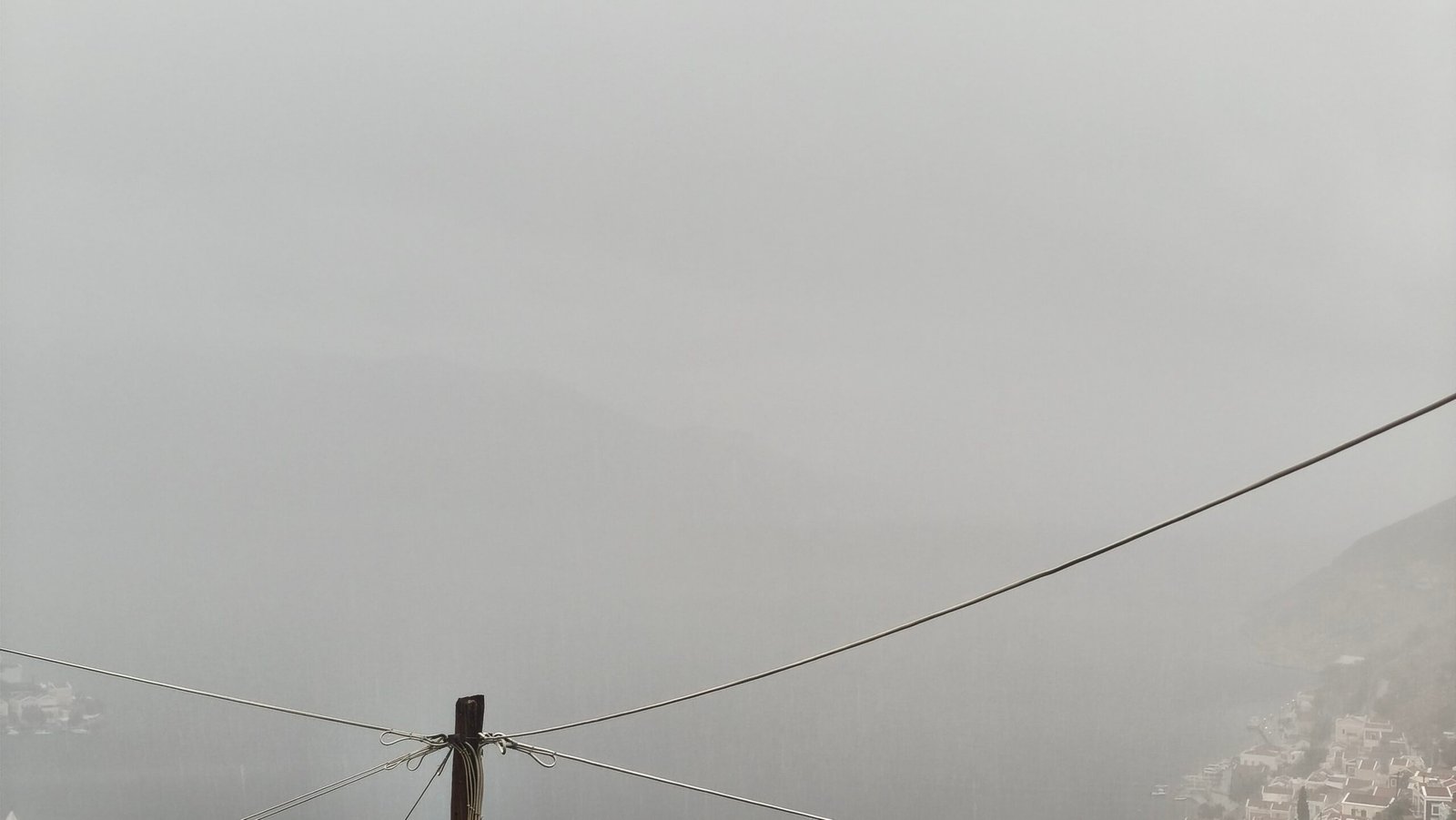
Here today, gone tomorrow. Except, in this case, gone in a few minutes and back again a short while later. Yesterday’s stunning view from the front window:
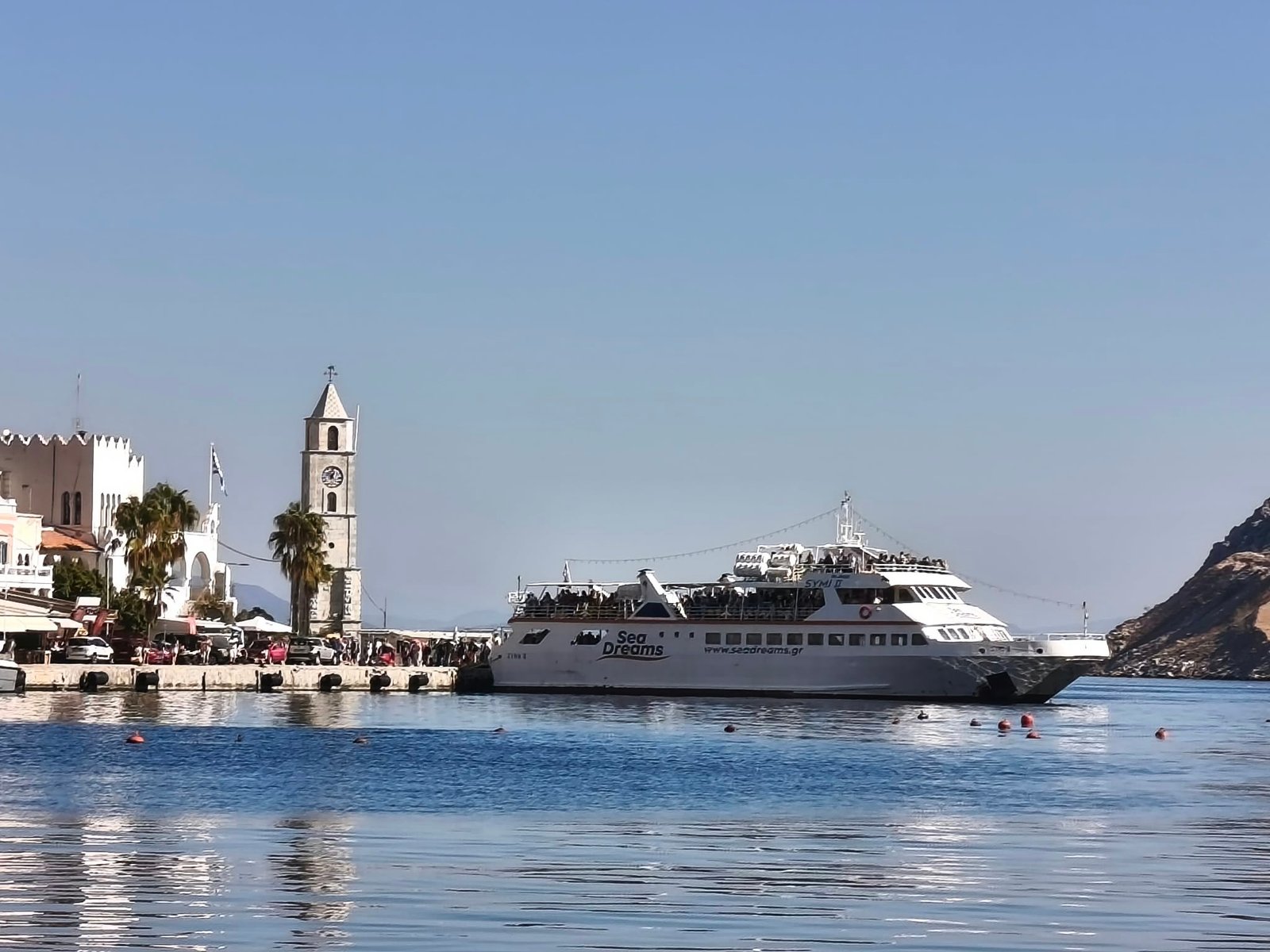
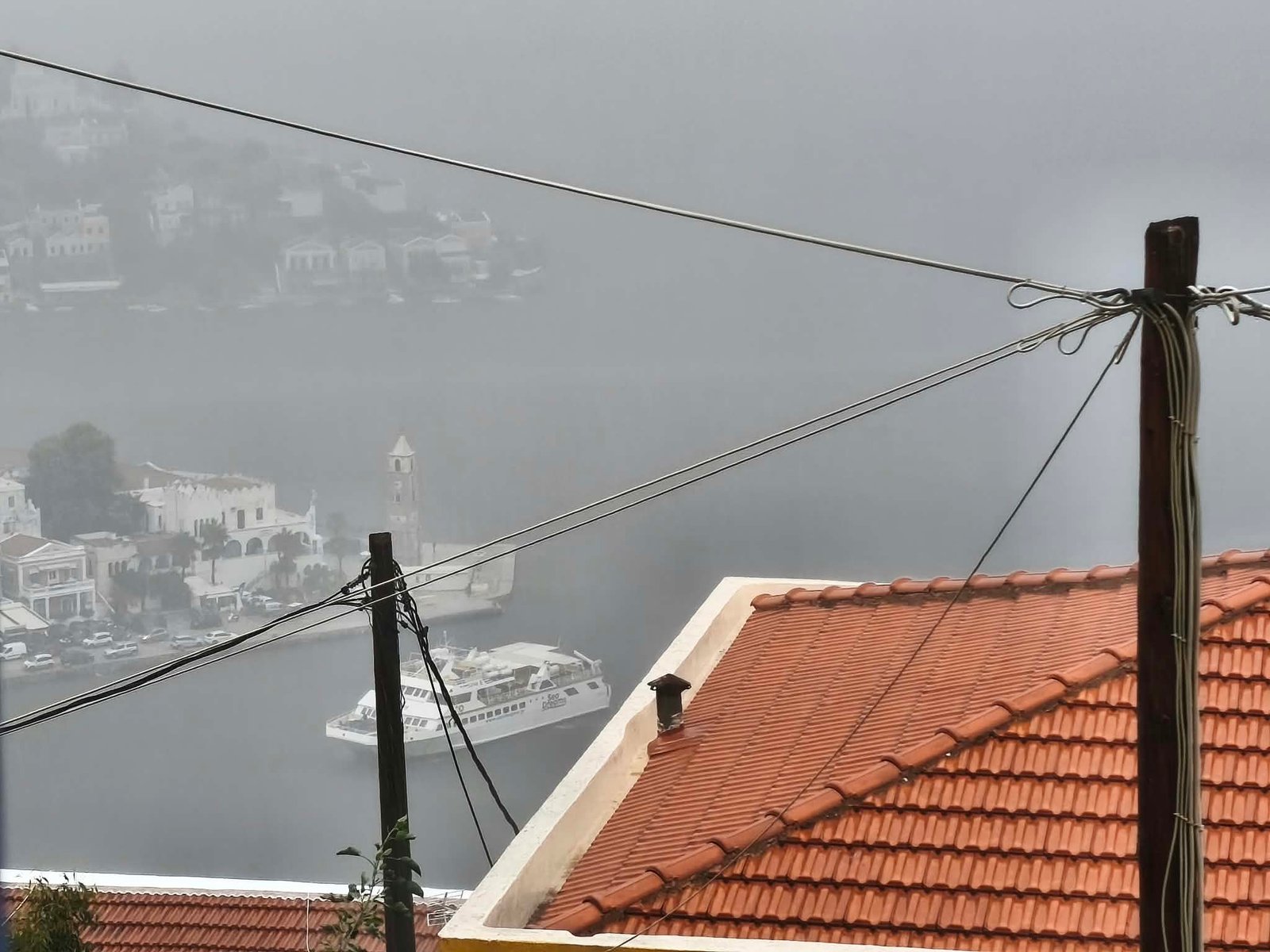
And when the curtain of rain parted? Lo! There was the stalwart Symi II bringing day trippers to visit the island on what must surely be one of the last trips of the, ahem, summer season.
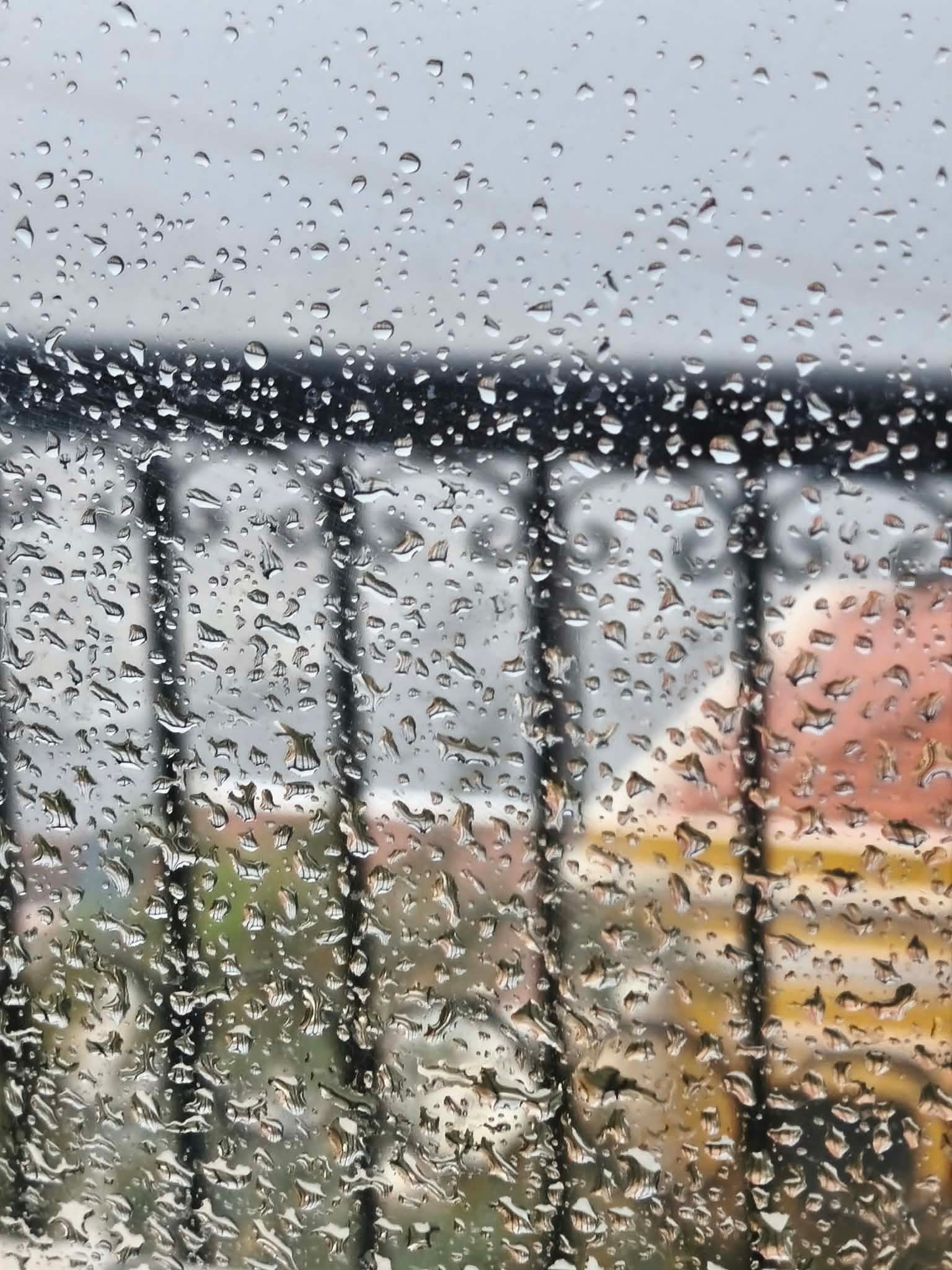
Today, we are promised the back of a holiday postcard sent from, without prejudice, the north of England. One that reads: ‘We get some kind of weather here every day.’ We’re in for cloud, light rain, heavy rain, maybe a glimpse of sunlight, but no nasty winds, and there was a mention of hail. Well, why not? I hope it holds off or goes away before the parade tomorrow, because tomorrow is Oxi Day, and there should be a parade along the quayside in Yialos.
Meanwhile, there’s more rain to come, though unless I have slept through something horrendous, it’s not been as bad as it could have been. In fact, thanks to Neil’s roof painting skills, we had no leaks into the bathroom and only a minimal drizzle in the porch. (Still have no idea how that gets in. I must also thank Steve, who lent us a few shovels of ‘mud’ to fill the cracks before painting, and my own gutter-clearing abilities, which freed up the overflows. That is, except for the one on the bathroom roof, which only disperses some of the water, because the pipe was built about half an inch above the level of the flat roof. Not sure what we can do about that, except sweep the rain into the pipe when we get the chance.
Meanwhile, life ticks along inside the house. I have a delivery to collect from the courier, which will have to wait for a break in the weather. I managed to advance my next story with a good five-hour session at the typowriter, and I found out the book I ordered on Edwardian Britain is nearly here (it’s for research, not reminiscence purposes, before you say anything). I’ve sorted my winter clothes from my summer wardrobe, so now, instead of two pairs of shorts and three shirts for one season, my shelf holds two pairs of trousers and two jumpers for the next; they’re an annual reminder that I must invest in some clothes shopping. One day. Having said that, we’ve still not had to use the heaters, and when it wasn’t raining, we had the front window open.
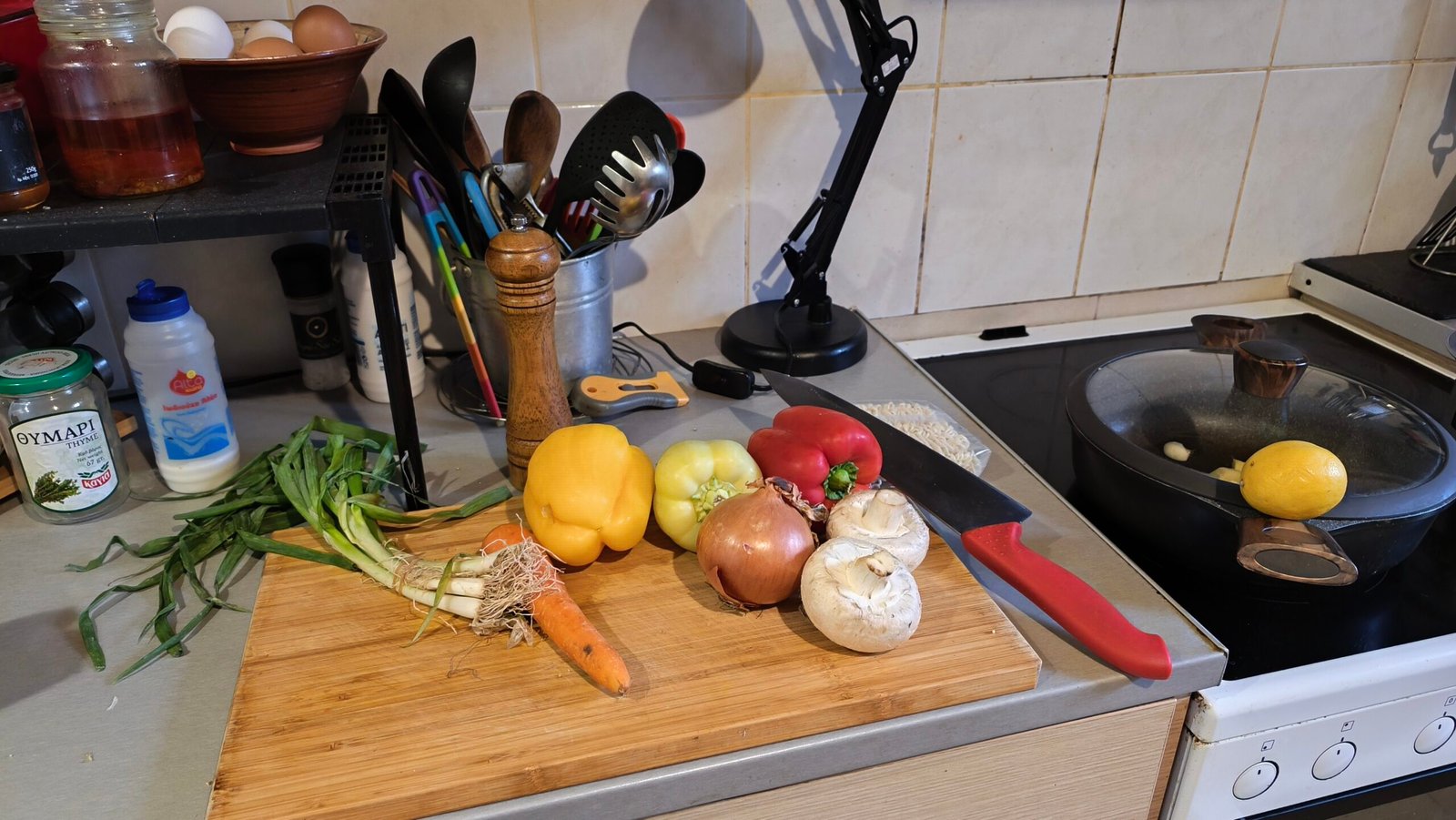
So far this ‘winter’, I’ve already made one successful cake in the air fryer. I don’t think we’ve used the oven since May (to keep the electricity bill as low as possible), and I’m not sure what will happen if/when we use it again, but the hob sees more or less daily action, and yesterday, to counter the cake, Neil set about one of his Japanese-style healthy-broth deliciousnesses. I’ll break that down because I’m not convinced it’s a word: delicious-ness-es.
And that’s where I am starting this Tuesday morning: back at the typo machine with not a peep from the weather sounding in the darkness outside, no heater needed, and only one damp floor towel to see to later. Onwards we merrily go….