Weather, Symi Spring and Hangover
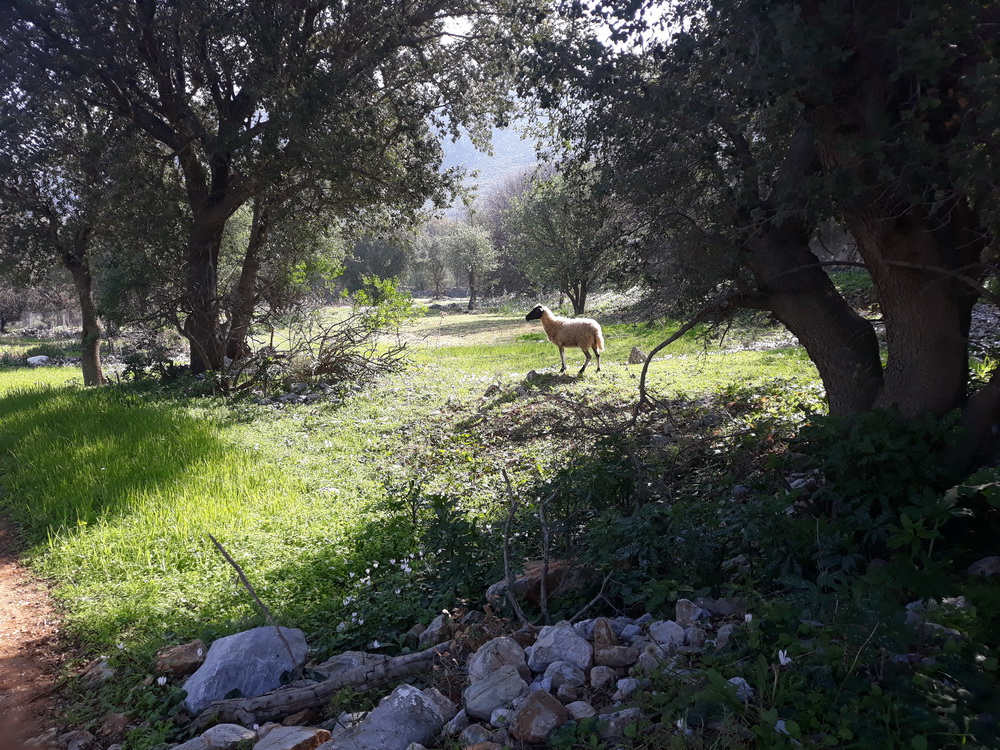
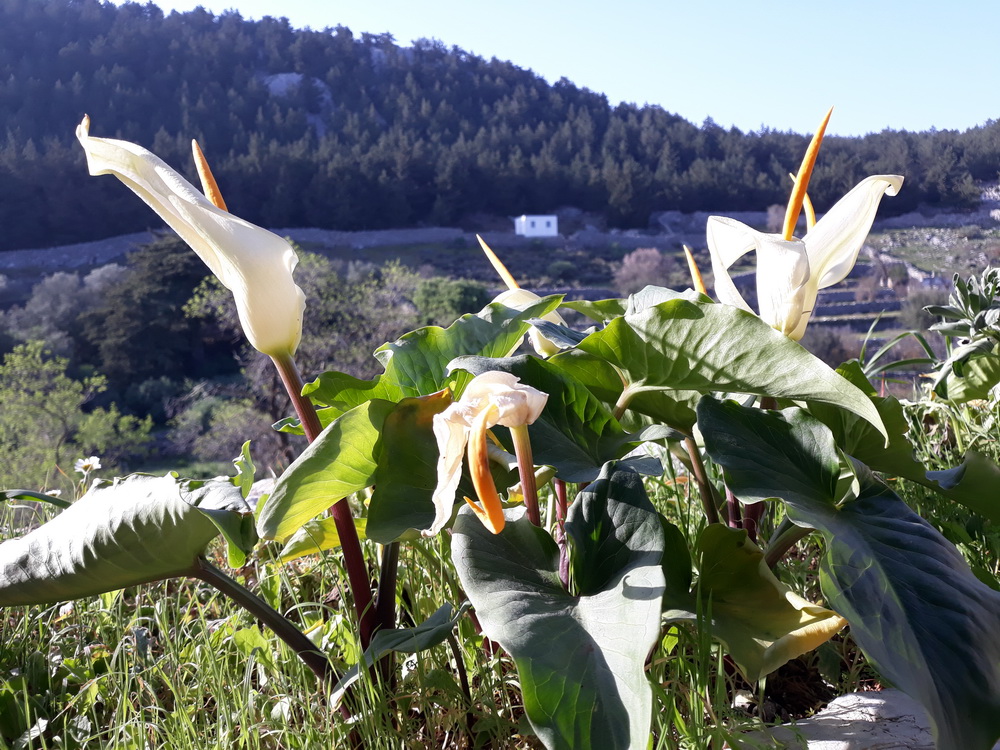
Time to delve back into Neil’s photo album for some more spring shots from Symi. Yesterday started with rain in the very early morning, and that was a hangover* from the day before when we’d had some showers and a little thunder. Some of the showers were hail, and they came and went with the speed of a passing train—all very sudden. The wind was also blustery, hitting the house from the north-west for a few seconds and then disappearing. Later on Wednesday morning (and ‘later’ for me means around 6.00), the cloud was clearing, and the rain had stopped, leaving the newly-planted chilli seeds a bit waterlogged, but not the inside of the house which stays rain-free, I am pleased to say.
Hangover.* Did you know the origins of this word? Yes, alright, so it could be too much retsina or ouzo that gave you one, but where did the word originate? There are a couple of theories for this, and neither have anything to do with alcohol. That usage has only been around for 100 years or so. One theory is that it came from business meetings in the 19th century, meaning any unfinished business at the end of one meeting was hung-over until the next. Another theory, and one which I prefer, is that it originated from rope houses, and it’s also 19th century. (A quick pause for a photo…)
In Victorian times, when you didn’t have a home and couldn’t afford a lodging house, weren’t sent to a workhouse or were fed up with sleeping in a cowshed or sty, you could, for a penny, take a place ‘on the rope.’ These were rooms in lodging houses where a rope was hung taut across a room, and people could pay to lean on it as a place to sleep. Some, the posher ones, offered a bench and a low rope, while others had no seating, and you had to, somehow, sleep standing up and hanging over the rope. It was cut or taken down early in the morning, no doubt sending people face-first onto the flagstones, and that was your night of hanging-over over.

These rope houses were mainly found in cities where populations were higher, but there were other places to sleep if you were short of cash, as many people were. Depending on the place, time in the century and other factors, you could pay 2d or 3d (tuppence or thruppence) for a coffin at an undertaker’s shop. Maybe that’s where the phrase, ‘to sleep the sleep of the dead’ came from? I’m not sure about that one, but it would be interesting to find out. However, sleeping in a tupp’ny coffin wasn’t the origin of the expression, ‘The graveyard shift.’ One theory is that it comes from the Victorian’s fascination with premature burial (and the 18th century). Someone was employed to stay awake in the graveyard overnight to listen for the bells. That is, bells which were hung above coffins and attached to them with a string that the potentially undead corpse could pull if the poor old sod beneath the sod found themselves buried alive. It’s also one explanation for the origin of the expression, ‘Saved by the bell’, though that is also thought to have come from the boxing ring. There is a school of thought that suggests this scenario also gave rise to the expression, ‘Dead ringer’, but I’m not so sure about that.

I’m also not sure how I got onto this subject as I started off telling you about the weather on Symi. Ah well, such is the wandering mind of someone just about to settle into chapter 17 of a new story at 6.15 in the morning. The sun’s coming up, the clouds are clearing, and it looks like it’s going to be a nice day. Oh, and by the way, I’ve not had a hangover for a year now, not since that night in Vancouver a year ago when we called into an Irish pub next to our hotel to find a forlorn landlord having to close as Canada was going into lockdown. He’d only just put up his St Patrick’s Day bunting and had to take it down and close his business. I wonder if he has been able to reopen yet?
