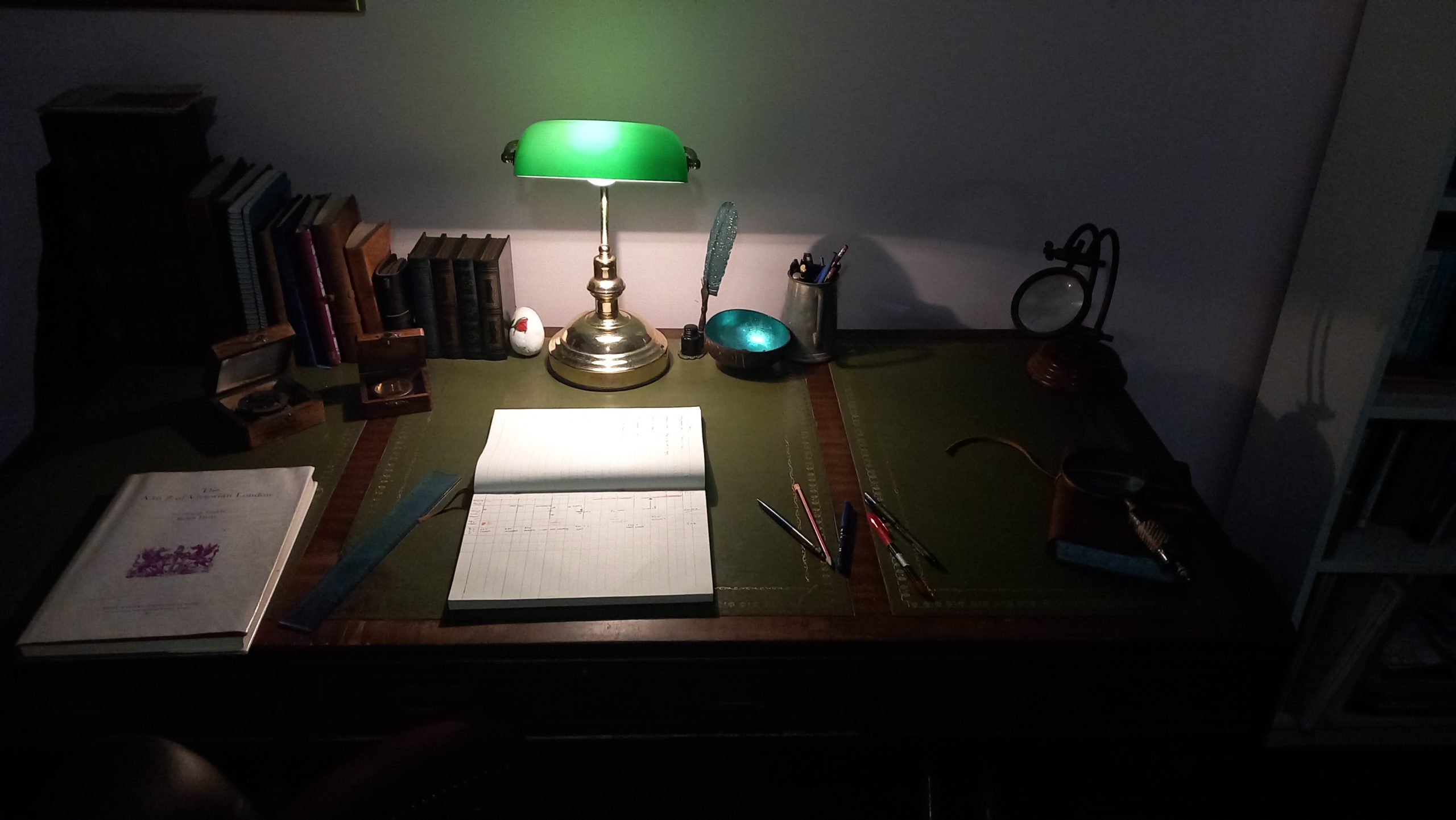
Fangs Ain’t What they Used to be.

We kept on ascending, with occasional periods of quick descent, but in the main always ascending. Suddenly, I became conscious of the fact that the driver was in the act of pulling up the horses in the courtyard of a vast ruined castle, from whose tall black windows came no ray of light, and whose broken battlements showed a jagged line against the sky. (Jonathan Harker’s Journal. Dracula. Chapter One.)

We kept on along flat roads cutting through a plain more industrial now than it had been twelve years before. Our driver took us from the main path towards Bran, cut through quiet villages, and out again along a road bordered by factories, with the Carpathian Mountains white-topped and forbidding behind. Our drive pulled up, eventually, outside the entrance to a carnival that was taking place beneath a restored Saxon stronghold, which stood only a few feet above the level of the ground.

Harker continues: The impression I had was of gloomy grandeur. It was built of massive stone, and though the stones were greatly worn by time and weather, the general effect was one of barbaric splendour. There was no sign of a bell or knocker…

What there was, however, was a queue of people ten deep and a hundred yards thick, all waiting for the opening time of midday. Aware that we would be waiting in line for at least an hour just to reach the ticket gate (and about the same again on the slope to the castle itself), and as we had e-tickets, I suggested we wander down to the front of the queue to see where we should go when the time came. The others followed, and lo! Just as we were approaching the gates, the clock struck twelve and, honestly, Miss, we were taken along with the crowd, and were through them gates before you could say Stick that in your queue and stake it, Van Helsing. Mind you, we still had to join those who had gone before in a long line that snaked up the sloping path from the ticket booth to the knockerless front door.

On our last visit, Neil and I had wandered into the Dracula-Land beneath the castle that thrives on tacky shops selling all things Vampire imported from China and nothing genuinely local, through, up and to the castle with no sign of a queue. We even had to open the front door ourselves.

Clearly, the popularity of the thousands of unrelated legends that have grown up around this place and the original novel, is as strong now as it’s ever been. Admittedly, the castle did open three hours later than normal that day, and it was the holiday season, granted, so it was very busy, but once inside, as long as you followed the arrows, kept in line with the other sheep, and didn’t try to turn back, you got to see everything on offer. This now includes an exhibition of Romanian folklore wrapped up in exhibits and projections of ghosts and ghouls. Most fascinating was why a trio of ‘three little maids from school’ waited for so long simply to stand in a chamber containing a single coffin and each take fifteen photos of it before squealing away to photograph the Pricolici. (A Romanian werewolf legend.)

Those in the know know that Bran Castle has nothing to do with Bram Stoker, his character, Dracula, or even Vlad III ‘the Impaler’, who provided Stoker with some inspiration but who 99% probably never set foot in the place. It’s popularity now has all to do with the post-WWII Romanian Tourist Board who came up with the idea of marketing the place as Dracula’s Castle. Our guide told us that there is no regulation of ticket sales, i.e., no limit to the number of people who may visit at any one time, and, as the queue to enter was even longer by the time we came out, I had to wonder how long it could continue to be a victim of its own success. How long until, dare I say it, something happens in that overcrowded building to draw the world’s attention?

After a good look round, and after signing the visitors’ book, we traipsed off downhill to the additional seasonal attraction, the Medieval Village. This, I have to say, was more like it. Local artisans were producing arts and crafts right there in a massive tent. Blacksmith, leather worker, knights at practice, pottery, all interesting to watch, and the only place in the area, I suspect, where you could buy something actually made in Transylvania. It was atmospheric, and there were few people viewing. I expect they were still in the queue, where we would have been had not some unseen, supernatural force compelled us to sneak in at the front. Ahem.

And onwards, Driver!

That morning, our man for the day, Marco, had collected us in his very comfortable car (for full details of make, model, engine capacity, torque, etc., see Harry). He’d listened to what we wanted to do, taken us for a hearty, local, breakfast followed by a healthy, informative walk around the old Saxon walls of Brasov, driven us to Bran via the quiet route (all those back roads avoided the coaches and the traffic then jamming Bran town), waited for us to see the castle, and was now driving us off towards our next stop, Râșnov Fortress.

This is the fortress that appears on the cover of ‘The Clearwater Inheritance.’

Again, I must compare now to 12-years previously. Then, there had been a space to park cars, a hut serving the drivers coffee, and very little else. Oh, apart from the ‘Noddy’ trains which ran visitors up the hill to the peasant fortress. The fortress sits on a hill backed by the Carpathians, overlooking the long, flat plane between Bran and Brasov. It’s known as a peasant fortress because it was a fortification built by and for rural Saxon communities for communal protection, rather than having to rely on the protection of a lord. Inside the battlements today is a reconstructed Saxon village, and although it was bitter, windy and quiet the last time we were here, the working village was the main attraction.

Now, at Rasnov, they have Southeast Europe’s largest dinosaur park, Dino Parc. There’s also a restaurant, a huge car park, and ugly tractors rather than jovial (if nauseating) Noddy trains. It’s a shame that the medieval village inside the fortress walls was being renovated, so we couldn’t see it, but it was lucky that it was December and cold. There were fewer viewers about, mainly families visiting Dino Parc, but that was below the fortress, though some creatures lurked and moved in the thick forest around us as we climbed the hill.

I’ll put the views in the gallery, so as you view the photos, you can imagine the biting cold, and the sound of the thin, bitter wind which watered the eyes, and I hope you take as much enjoyment from the sights as we did.

After this visit, a long walk and a chat with Marco about matters of history, and his experiences growing up under Communism, we drove to Poiana Brașov, Romania’s premier ski destination. Yes, it has much expanded over the years, is more popular, there are now banks of holiday chalets, new hotels going up, bowling alleys, fast food alongside financially impossible food, all the après ski you could need, and nowhere to park. We stopped only briefly for a look and a play in the crumbling snow.

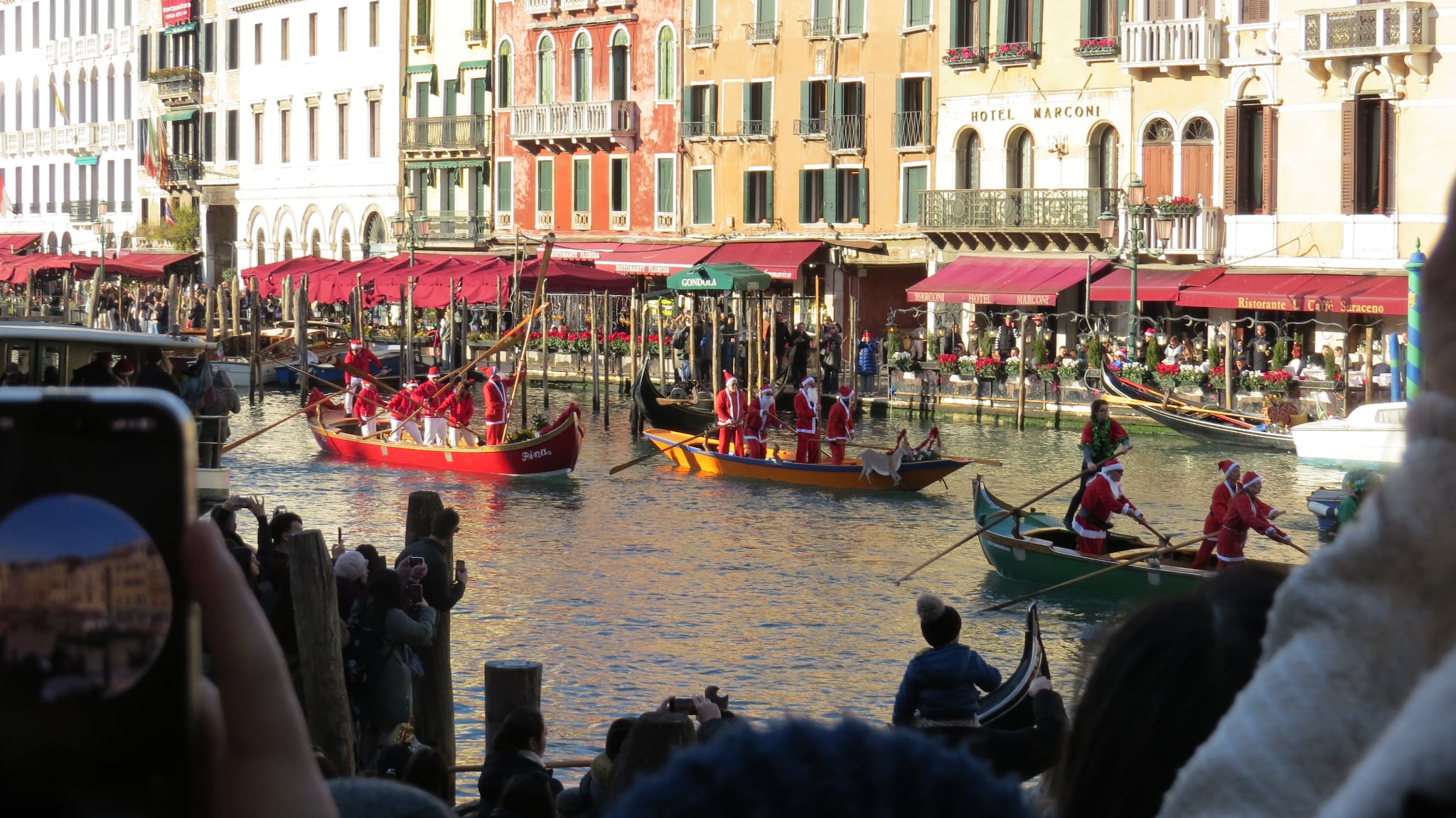
It may sound as though I wasn’t particularly enamoured with this day, but I was. Very much so. Tourism has grown in the country, that was obvious, and that’s a good thing – as long as it doesn’t get out of control, as we have seen in other places, like Venice and Santorini. Every sight was a new one for some of our party, and an interestingly changed one for us. Marco was incredibly knowledgeable and drove safely. As he said, you don’t have to drive well in Romania, you only have to be clever. If you’re ever heading to Bucharest, Brasov or the surrounding area and want a reliable driver/guide, then check out his Facebook page. Highly recommended.

On the way back to Brasov, we stopped for more photos of the city from high on the road, and stopped again to take a look at one of the ancient towers, where Harry nearly took a purler on the slippery path. Growing up on Symi, you don’t get to walk on black ice very often, but his self-stabilising internal gyro worked in tandem with the flailing arms and ‘Whoa!’ sounds, and he remained upright. This proves that such an instinct must be passed down through the genes. At the end of the day, we were delivered back to our hotel/stage set. Here, we were able to warm up, change and prepare for another food hunt through the still glittering and thronged streets of the old town. After a wander, we found a restaurant that provided something slightly different to the norm, and ordered a fine dinner with local wine and beer. The meal provided the perfect end to a day of adventure, and saw us head home fed, tired, and contented.

Before you go, you might like to know that there are only a few more days left of this ‘What I did in the holidays’ before we return to normal Symi Dream viewing. I.e., not much news about anything because it’s that time of year. Just to let you know, it’s been wet and windy, the boat was delayed a few days ago, it’s now clear and cold at 6° this morning (Tuesday), and each time I venture into the village, I see no-one, unless we’re going to the super market, in which case, it’s its usual riot of warmth and humour. Not much to buy, of course, not unless you hit delivery day, but you know… Symi winter survival tip #1: If it’s there and you want it, have it; if not, make do.

Check back tomorrow for more of this kind of thing, and enjoy the gallery.

Brașov in Brass Monkey Weather

The locomotive steamed west from Budapest, its steel plough slicing snow and hurling it aside in swathes. Its pistons pumped an incessant pulse, while the chimney belched a constant stream of smoke that billowed from tunnels and trailed behind to hover above the sleeping countryside. Cities fell away to become dense forests topped with silvery-blue moonlight that bathed the land from the hedgerows to the star-showered horizon. The Danube glinted beneath the cloudless sky until the train left the river to its meandering and sped away on its own path. The warm throw of yellow light from the dining car brushed banks and fields, the silhouettes of the wealthy rising and falling over cuttings in distorted shapes and vanishing as the carriages pounded across bridges. Firemen shovelled, stewards served, and passengers dreamt of elegance in gently rocking bunks, unaware of the urgent night cry of the whistle. The Orient Express kept its times…

Thank you for thinking that was an extract from ‘Murder on the Orient Express.’ It was actually a transition scene from my ‘The Clearwater Inheritance,’ and the full section takes us from Budapest to Cornwall in one tracking shot of prose. Meanwhile, I’m taking a slower tracking shot from my bunk on the overnight train from Prague. Lying there and looking out of the window, I find us motionless by a snow-dusted platform, and we stay there for some time. I’m aware that people are outside. I can’t see them, but work is taking place somewhere, and there comes the occasional clunk of a carriage door. Eventually, the train moves away, silently at first, and then returning to the speed and rhythm that lulled me to sleep several hours ago. Then, we were in Hungary; now, we are in Romania, in the heart of the Transylvania region, and heading towards our next two-night stop.

Brașov

There was snow. Not as much as at this time in previous years, we were told, but still, there was some. Certainly more than has ever been seen on Symi. It became more apparent as the sun rose, and we passed rolling, tree-covered hills, houses dusted with icing sugar snow, wide fields and frozen rivers. The city of Brașov was the same, with the outskirts of town a collection of chillingly Communist-built housing projects, and the centre of town being a collection of all kinds of architecture, but the oldest part being a mix of medieval Saxon and Baroque. The railway station was a testament to the post war regimes throughout Eastern parts of Europe, functional but not fun, and we were approached by a secretive taxi driver before we’d left the building. This kind of touting still happens in places, and it used to happen on Symi as people disembarked from the boats. Maybe it still does. As it happened, our guy was a genuine taxi driver in a city cab, and all he was doing was jumping ahead of his colleagues (by touting inside) and offering his services for the whole day. Not those kinds of services, Mrs! Did we want a driver and a guide? He could take us to… Yeah. No. We’ve already got one booked for tomorrow.

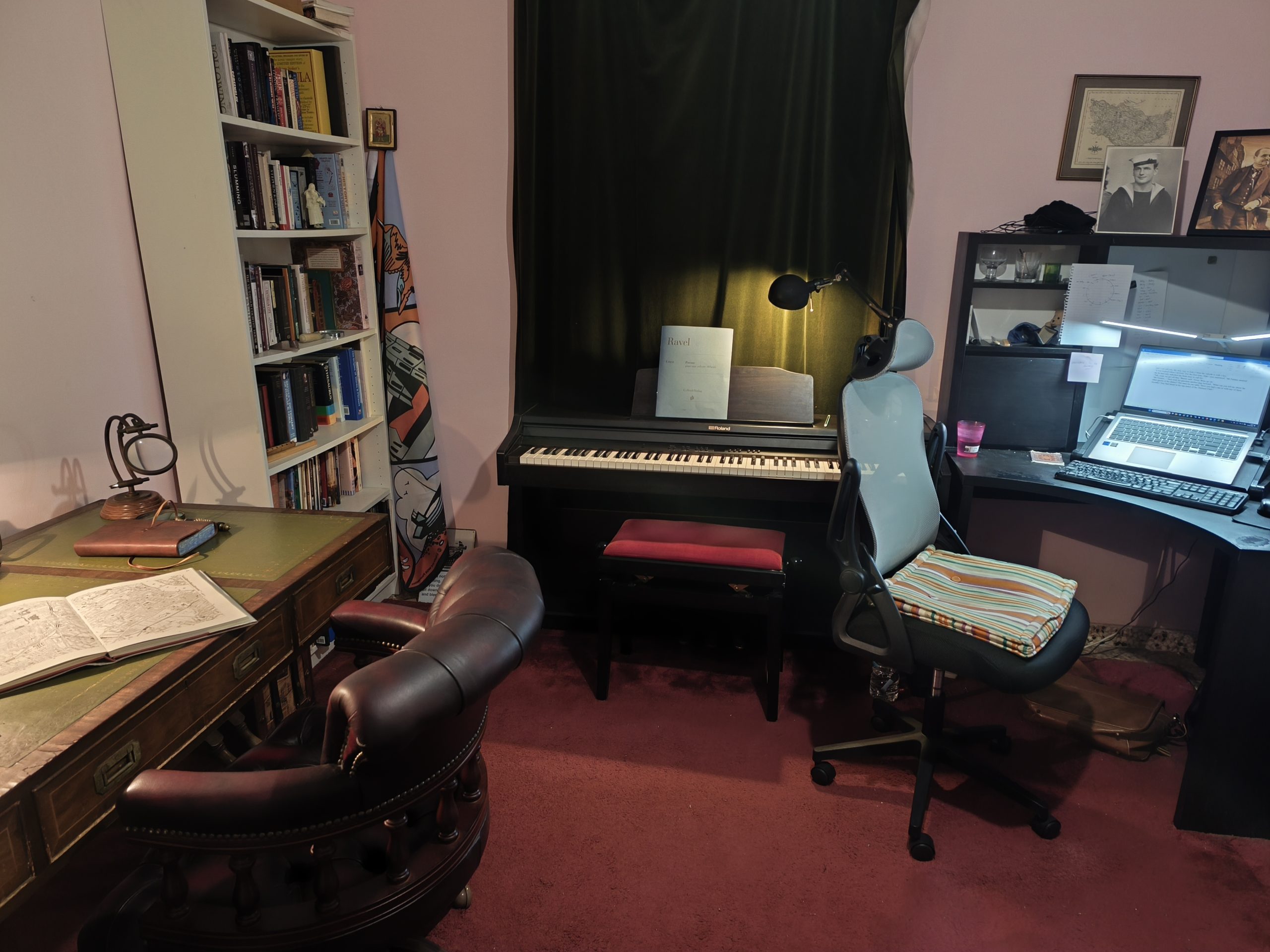
Also booked in advance was our accommodation. Described as a hotel, I’d say it was more like the soundstage set for a remake of La Boheme. Under the eaves, it offered sloping roofs, large communal areas to share with other guests, a kitchen, comfort and warmth with a touch of luxury, and came complete with baffling coffee machine, a slightly OCD hostess, and an out-of-tune piano. It was fab. Apart from the bathroom in our room, where someone had had a thing for levels. The WC stood on a raised dais, so taking the throne really was like taking a throne, and the shower was also raised about nine inches from the ground. Climbing up and in was easy, but it was also easy to forget you were on high, making stepping out of the thing something of a gamble.

Again, it was a case of dropping bags and heading straight out for a gander. On my last visit here, I’d wanted to see inside the famous Black Church, but it had been closed. In the summer, they give organ concerts there at lunchtimes, but we weren’t so lucky in the winter, though we were able to go inside. This church has the largest mechanical working pipe organ in Romania, the notes tell me, and we admired it from a distance, as we also admired the medieval tapestries and other treasures. Originally dedicated to St Mary, the church is now named the Black Church because of a fire that destroyed most of the city in 1689. The church was blackened, and the name stuck. Interestingly, that was only 23 years after the Great Fire of London. I don’t know why that’s interesting, though. It just is.

As was the rest of the old part of town, which isn’t that big, so it’s easy to walk around. Except when it’s the Christmas period, and everyone has come in to see the market, to chill, perhaps to stay and visit relatives, or go skiing nearby. Whatever the reason for it, the place was heaving with people, and finding an eatery was often a case of either being lucky to get a table or having to wait. We were on the lucky side of things because we never had a problem finding somewhere to eat, the food was plentiful, and the local wines were spot on.

We did do one crazy thing that day. The city is surrounded by the Carpathian Mountains, and overlooking the city is Tâmpa Mountain. On the side of it, they’ve erected a massive sign showing the town’s name, a little like we have in Symi right now. (Up on the road overlooking the harbour, we have a large (ish) sign saying ‘Symi’, except smaller and lower down. Much lower down. I should try for a photo one day.) To reach the visitable summit of Tâmpa Mountain requires either a very long walk or a cable car. We took the latter, and looked down on poor souls hiking to the top in the afternoon flurries, no doubt freezing their fingers off and either getting a rush from their sport, or wishing they had never bothered.

The reward for this upward journey was the view. On the day we were there, the clouds were hanging low over the Carpathians to the east, and hiding most of the valley ahead of us, so the view was mainly of the snow-dusted town from a couple of thousand feet up. It was freezing. The wind was blowing in, lowering the already below-zero temperatures, and we didn’t stay admiring the place for long. We were soon inside the summit hotel, sipping various varieties of coffee to warm us up.

The rest of the day was about sightseeing and shopping at the local supermarket, which was reminiscent of Sotiris’ super market in Horio, but without the cats. On the way to dinner, we caught one of the local and ancient rituals being played out in the street. In the Jocul Ursului, the ‘Bear Dance’, people in heavy bear costumes dance to drums and flutes, symbolizing the death and rebirth of nature, warding off evil spirits, and bringing good luck/health for the new year. And there they were, drumming and dancing through the glittery streets on a cold December evening, making a lot of noise and causing a lot of cheer, and giving us an unusual sight to remember. We encountered another troupe at the railway station a couple of days later, but that wasn’t as magical.

Here’s a minute of noisy video.

Afterwards: Dinner in a cavern, some excellent Transylvanian wine, a chilly walk back to the Attic of Antiquities to rest, relax, and finally stop travelling. It felt like we’d been on the go since yesterday morning when we left… Where were we yesterday morning? Prague! That was it. Trams, trains, two countries, taxi, cable car, it was definitely time to put the feet up.

Tomorrow, Dracula Land. Now, today’s gallery:

Prague to Vienna to Brasov via Budapest

3 May. Bistritz.Left Munich at 8:35 P. M., on 1st May, arriving at Vienna early next morning; should have arrived at 6:46, but train was an hour late. Buda-Pesth seems a wonderful place, from the glimpse which I got of it from the train and the little I could walk through the streets. I feared to go very far from the station, as we had arrived late and would start as near the correct time as possible. The impression I had was that we were leaving the West and entering the East; the most western of splendid bridges over the Danube, which is here of noble width and depth, took us among the traditions of Turkish rule.

That’s the opening paragraph of Bram Stoker’s ‘Dracula’, and, like Jonathan Harker, we are heading to Transylvania.

Saturday, December 27th. Day nine of the trip. Roughly 1,521 miles travelled so far since leaving home, and 541 miles to travel today before we reach our next destination tomorrow. First train, 10.36, arriving at Vienna 4 hours and 13 minutes later (14.49). Second train, the Datcia 347 overnight from Vienna to Brasov, with two two-man sleeping compartments, leaving at 19.08, and arriving in Brasov at 11.03 the next morning.

Let’s see how this day is going to go then…

It begins with packing and preparation. Somehow, we all work around each other in the kitchen. The masters of the coffee machine masterfully make sludge, while the tea drinkers of the group do the decent thing with Colette’s donation. Bags packed, rooms tidied, washing up done, anything edible of use goes into a bag for life, final check of all rooms, passports, tickets, money, another final check of all rooms, leave the Christmas tree, check again that we’ve not forgotten anything, and leave the penthouse to enter the chilly morning.

The thing is, we’re not leaving by the same station as we came in to, so Jenine has checked and double-checked the appropriate tram route. This is a good idea.

I once flew with Olympic from Rhodes to Athens to Berlin, there were no delays, my luggage came out first, and I was in a taxi to my hotel before you could say Freundschaftsbeziehungen. The weekend trip went well. I met up with some friends, and as they were leaving before me, they told me their easy route to the airport. This, I took the following morning, and arrived feeling very pleased with myself because I’d done it all by public transport. I wasn’t so pleased with myself when I discovered I was at the wrong airport, and had to spend the €50 I’d saved on a quick cab around the city. Hoppla! As they say in German.

The same mistake was not made on this day, as we took our tram across town, over the river, and into the more industrial and less picturesque part of the city, where, for some reason, every other building is another home for Allianz. A quick investigation of the station reveals, among its brutalist design, cracked tiles and failing concrete, a small café in which we can wait and where we can feed the teen, while the scout checks out which platform we will need, and the Master Controller checks the punctuality of the train. Here, we fuel ourselves for the hours ahead.

(Jenine has bought a replacement bobble hat in Prague.)

Soon enough, we’re on the icy platform, doing that thing where you look up and down the tracks every five seconds in case something has miraculously appeared like the Flying Dutchman from the mist, or the Flying Czech from the blue and icy air in this case, and, eventually, it does. We are at the right spot on the right platform for our carriage doors to open right in front of us (the European customer care ethos is still prevailing, for now), and on we board to find our reserved table.

This bag up there. I’ll put yours here. Will that go under your feet? Mind the hat! Whose is this? Where’s the bag for life? It died. No, here it is. Is there a loo? There will be, sit down. I can’t, there’s a bag in the way. What, no hatstand? Sorry madam. I hope this isn’t a quiet carriage. Where’s my pills?

Alan Whicker used to say, ‘Any fool can be uncomfortable, so when you are travelling, always make yourself as comfortable as possible.’

And we do. Settling into our new space, we look forward to the next four hours and thirteen minutes, and off we set.

From city to countryside, over plains, through stations busy and not, past engines, the snow fades away, the ground is brown and ochre as if this were autumn, the time passes quickly, as do Brno and other names I vaguely recognise, and, in the midafternoon, we glide into Vienna.

Vienna railway station is not unlike a small town. They have maps and online guides showing you what’s available in what supermarket, shop, department, café, restaurant, and probably hospital, and being Austrian, it is all very well organised and signposted. This means we’re able to stow our bags in a large locker before heading out to see at least one Viennese sight/site before boarding our next train in just under four hours’ time.

Out of the station, do up your buttons, turn right into the wind, look back at the sinking sun beyond stark, modern buildings, and keep going, up to the lights, cross, turn right, and there’s the long view of the Belvedere. The Belvedere is a historic building complex in Vienna, Austria, consisting of two Baroque palaces (the Upper and Lower Belvedere), the Orangery, and the Palace Stables. The buildings are set in a Baroque park landscape in the third district of the city, on the south-eastern edge of its centre.

I am sure you knew that. You might also know that the Belvedere currently houses museums and art galleries, none of which we have time to see.

It’s a case of snap this, look at that, appreciate this and look over there, but all from the outside as we walk the gardens, and then a circuit of the complex where we visit a war memorial, and ignore a Christmas market, while trying to find a café, and deciding to have something to eat back in the station. We also need to do some shopping ready for the evening and night on the train. Someone has the foresight to buy noodles and beer, so I’m happily restored to full health, and the game can continue. So happy am I that I venture into a clothes shop and pick up three scarf/snood/things for us boys, and on the way back, check out where the Spar is, so we can buy supplies. This, as it turns out, is not as easy as it sounds.

Perhaps Saturday afternoon is the time for the Viennese to come out and do their shopping in a small, railway station branch of Spar, as that is what is taking place here. We enter in pairs, but it soon becomes apparent that we are not alone. I mean there are about 500 people crammed into long queues, and the time for departure is heading our way. We decide to divide and conquer, so H and I leave the other two to their side quest and go to pick up the luggage. This we do with ease – well, entering the code and retrieving the bags is achieved with ease; carrying the 15 bags back to the Spar upstairs is another matter. But we manage, and message our success to the B team, and wait. And wait. And bob up and down trying to see in, catching a glimpse of a bobble hat and a bald head, both belonging to the wrong people, and wait, and watch the clock, and… Finally. The B team break free from the clutches of the great Spar and appears with more bags for life (or at least, bags for the next couple of hours), and with those added to our caravan, we set off for the platform.

Now, here’s a short tale. Once, when Neil and I were travelling around, we travelled from Prague to Vienna on a smart train with buffet service and a dining car, but as we had a longer, eight-hour journey coming up, we decided to leave the new-to-us experience of a dining car until then. That day came, Budapest to Belgrade (roughly eight hours, in theory), and we set off in an equally smart, first-class carriage that had locked toilets and no buffet car, so I investigated second class to find no dining car, no buffet anything, and only the very basic of toilets. I mean, practically the hole in the floor to the tracks kind of job, and one was so bad, someone was keeping chickens in it. Things became stranger when we arrived at the Hungary/Serbia border, and three sets of officials boarded, one lot with sniffer dogs, and someone ran across the roof, another man was taken off, never to be seen again. Nor, when we set off, and I turned behind to see about using the loo, was there any sign of second class. Those carriages had vanished, but at least someone opened the 1st class WC. But I digress… Kind of, because…

Our Romanian train doesn’t let us down. We have a compartment for each pair with two narrow bunks, and a third if needed (as long as the sandwich filling is very thin and no-one is claustrophobic), and we have… not much else, actually. A window, and just enough room to shove bags in corners as long as we sit on them. We try a seating compartment a way down the train, and find a six-seater with only one sceptical looking woman using it, and we try sitting there for a while, but the lighting is so dim, and we don’t feel able to relax because we know we’ll be disturbing our fellow traveller, so we bundle back to our cabin to become students on an interrail adventure. Three on the bottom bunk facing the wall, one on a bag in the corner, drinking beer, having a laugh, chatting the evening away and enjoying the blackouts. These happen at the start of the journey. We’re moving, but there’s no light in the cabin. Then there is. Then there isn’t. Then there is. A passenger comes to ask if our heating is working. Yes, it bloomin’ is. I’m sweating like a glassblower’s armpit, and even with the AC off and the window open, we’re at a toasty 98°. He is clearly unhappy and mutters his way towards the steward (who we rarely see after our initial grunt of welcome).

The evening draws to a natural end, and we prepare for bed. If you are of the type who likes to shower before bed, and you find yourself on a Romanian night train, then abandon all hope. I mean, you could try, but you’d have to squeeze into something smaller than a telephone box with one tap, one hosepipe, and I’m not sure I remember drainage, while standing not three feet away from the leaking WC and holding up a queue of others wanting to be somewhere else but needing the facilities.

We don’t bother. Instead, we climb into the bunks with me worrying that Neil will roll out (he doesn’t), and wondering where I will wake up, and before I know it…

Oblivion for a short while. A speeding train passes. The window is slammed shut by the suction. Things calm. Rattling, rhythm, swaying… Screaming whistles from the engine. I think they are doing it for fun. Then, I suspect, we are crossing the border. I don’t know the time, but I am grateful I am not woken to show papers and passports, and then… Definitely time to get up. My T-shirt is soaked as usual, and I need the facilities, but it’s not yet dawn, so it’s quiet out there, and we’re stationary in a station. Which turns out to be Sighisoara in the heart of Transylvania. And it is tomorrow, so we must now wait until, strangely, tomorrow to talk about Brașov.

On the Feast of Stephen

Boxing Day was almost a day off. We finally did that thing we always say we’re going to do at Christmas, and that’s to go for a long walk. We used to haul ourselves away from excess on one day over the festive season and waddle and burp our way up a hillside, but we’ve not done it for years. Not until the Feast of Stephen, when all we had planned was the concert in the late afternoon, and, according to the spreadsheet we had “Tour guide Harry…” for the day, and a list of places to see, most of which we had seen yesterday.

Tour Guide Harry was quite happy to lounge in bed and drink coffee, but we finally got our various acts together and headed out into the cold for a decent walk. We’d been averaging eight to ten miles a day simply walking from one place to another, from one hotel to another, or the length of a train looking for the WC, and we were to add a fair few more miles that day.

From Wenceslas Square down to the river and across in the startlingly clear and icy morning. Calm river, water birds, a demonstration on the riverbank, incredible architecture, along one side of the river, over again and into the Jewish Quarter via the Rudolfinum concert hall and the commemorative statue to liberty. Then, back towards the centre of the Old Town to take another sideways glance at the Christmas market, which was about 90% food, so not much good if you were looking for local arts and crafts. Of course, we were visiting these places at the busiest time of the winter season, so you can’t complain about crowds, and I’ve already said, it was slightly quieter than when we’d been at Easter. Even so, it was good to get off the main roads now and then and take a look at what lay behind. For example, we saw the famous hanging-out man, which is David Černý’s Statue of Sigmund Freud. Beyond giving you that info, I can be of no help.

We also went to see a statue that wasn’t there. This had happened before, when H and I went to find Mládí, the famous statue of Youth at Prague Castle. It used to be there beside the Toy Museum, and it was famous because the bronze had weathered to a natural, almost-black colour, apart from the young man’s tackle, which was dazzlingly shiny thanks to the hands of hundreds of people who’d grabbed his nuts for luck. (Thiers and his, I imagine.) When Neil and I were there in 2015, I remember a queue of giggling Asian girls and a couple of burly lorry driver types waiting their turn. When H and I went to see him last time, he had gone. Same this time. He had been removed in 2016 as part of renovation work and never returned. He’s in the city art depository now, no doubt recounting his tales of grappling girls and dubious lorry drivers to Don Giovanni.

Why Don Giovanni? Because he’s missing too. We walked to the Estate’s theatre, where H and I had seen ‘The Magic Flute’ back in 2023, and where there had been a sculpture depicting Don Giovanni (which was first performed at that theatre on the 29th of October 1787). Now, that too has gone. I mean, what next? No Irish pubs?

Before.
After.

What is it with Irish pubs and European cities? We found a few in other places too. Not complaining, because Czech beer is Czech beer no matter where you have it, and the menus were great. I was just wondering.

We ended up in one or two that Boxing Day as we went a-wandering looking for missing works of art. Jenine and Harry went to a beer museum while we had lunch and did some more wandering as the sun started to set, met up with the others to look at the place H and I stayed last time, to see the Cat Café from outside (yes, it caters for stray cats and cat lovers), and to make our way to the concert.

A bit blurred – phone cam and a dimly lit room = blur.

Guess who was in the ensemble? Dagmar, again on the viola. The day before, we’d heard her solo Paganini’s Caprice number 24 in A minor (that’s The South Bank Show tune) which, in parts, looks like this:

Now, she was helping the others along with O Come All Ye Faithful, but once the carols were done, they launched into many other classical pieces, we had a mezzo sing for us, and we had the titular organist play for us. The net says about him: The titular organist of the St. Salvator Church in Prague’s Klementinum complex is Robert Hugo, a noted specialist in historical organs and Baroque music who has held this role since the 1990s, frequently performing at concerts held in the Klementinum’s famous Mirror Chapel. So, there you go.

I think, that night, he was in rather a hurry to be somewhere else, for after helping out with a couple of early numbers, he dashed of Bach’s Toccata and Fuge in D minor, and had practically shut up the organ and collected his papers while still holding the final pedal D. That done, he was off – but it was a wonderful concert, and wonderful to see H’s face when the organ began – and it was only a chapel instrument, I reminded him. Imagine what the cathedral ones sound like. Hopefully, one day, he’ll hear one in full throat, feel the air vibrate throughout a cathedral, and appreciate the power of mechanics and music in harmony.

Before that, though, food. We headed to the Wet Beaver for dinner. That was the restaurant where we’d drawn looks three years ago by discussing the river rats, aka, wet beavers, and H wanted to return there. It was just around from where we stayed before, and the food was good. Mind you, by then, I was reduced to pea soup and some slices of cheese as I’d already had Irish bangers and mash. Still, it was another memorable dinner followed by a slow walk back to the mansion apartment ahead of packing for the next day’s journey. This one promised to be a right old adventure, and it was certainly that, as you will find out tomorrow.

Meanwhile, as Tony Heart used to say, here’s the gallery.

Christmas Day in Prague

Christmas morning comes, and the house creaks gradually into life. It never fails to impress me how teenagers can sleep for 12 hours and still be silent until after their first feeding. I’m sure when I was 18, I was up at six every day, even if I hadn’t gone to bed until after midnight. I only once remember waking up at ten one morning, as fresh as a model in a senna pod advert, and thinking I’d missed half the day. However, as much as the teen wants to lie in, today is Christmas Day, and we have two appointments booked.

There are to be no presents this Christmas because the whole trip is our present to each other and ourselves. Having said that, Neil paid for the Venice gondola as a gift, and I’ve done the same with our first appointment today. But that’s not going to happen unless we get on the road, so after breakfast of eggs on toast, coffee for the caffeine junkies and tea for me and H (I brought a zip-lock bag of proper tea donated to the expedition by Colette), we set off into zero degrees to find the nearest stop for tram #22.

I should mention that H and I had been to Prague in 2023, and for the next few days, H was mainly in charge of routes and ascents because he had been there before. This is how we knew to search out the ticket machine on the tram, so as to avoid fines. Not that there was any sign of anyone checking. The trams were already busy at nine in the morning, mainly with eager tourists like us and people heading to work. One of the reasons for choosing Prague for Christmas Day was that everything is open. Shops, sights, restaurants, concert halls; nothing, it seems, sleeps, so there is always something to do.

In our case, it was a tram across the river pointing out places we’d been to on our previous visit (Petrin Tower, Observatory, Museum of Music, an Irish pub…), and getting off just below the climb to the castle. There’s a walk up a few hundred steps to reach the top, but hey, we know about steps, especially those of us without transport, so that was no problem. All the same, by the time I reached the top, I was dripping with sweat despite the freezing weather.

There was much ‘Remember this?’ and ‘When I came here in 1783…’ and so on, as all of us had been to the city before, and having been more recently than the others, H and I knew the modern score. A quick glance at the changing of the guard at the Presidential Palace (only the quick change, not the full-drag version), and on to the security barriers now in place at the entrance to the castle grounds.

This is another sad reflection of first-world affluence. Security guards at heritage sites, human traffic restrictions, queues, extra payments to enter cities because we’re gradually eating away at our own world from its resources to things we’ve built from them, and everyone’s an Instagram influencer. I’m sure a large percentage of tourists only visit places to be seen to have been there and to show off the fact on their ‘socials.’

‘What did you think of Prague?’
‘It got me 2k more views.’
‘Yes, but the culture?’
‘Hmm? The what now?’

[Inserts a range of emojis from ‘meh’ to ‘vomit’ and moves on.]

We took a look at St Vitus Cathedral from the outside, and the others went up the tower.

I wasn’t part of the summit party. I tried, but the irrational fear of falling from a great height, plus a little claustrophobia on the two-way, narrow tower stairs, sent me back to the courtyard. There, I sat like Bernie Sanders, wrapped in my overcoat, hat and gloves, minding my own while they scaled the heights.

After that, onwards through the grounds to the Lobkowicz Palace just as it opened, for an hour admiring the private collection of art, china, music memorabilia, including some original scores by the greats, and other interesting cultural things… Such as?

Well, there was a fascinating display of Botulinum toxin housed in an alarming number of lips and trout pouts. Overcome Asian girls photographing every single exhibit to death, people posing by the piano (oops), and a few appreciatives cooing over the Canalettos.

One Canaletto. Lord Mayor’s Day, 1747
A modern-day Caneletto, Christmas Day, 2025

And onwards to take our front row seats in the music room for a lunchtime concert. These happen all the time in Prague, it seems. You can’t help but stumble across members of the Czech National Symphony Orchestra or the Dvořák Symphony Orchestra popping into a baroque concert hall to dash off a few numbers before heading off to their next venue. In this case, we had a wonderful hour of flute, piano and the viola, which was played by a lady called Dagmar Mašková, a member and Deputy Section Leader of the Prague Philharmonia, who would turn up again in our near future. They usually play the old faves, the ones everyone knows such as, ‘That thing by Mozart, and the lovely bit from Orpheus in His Underwear. Oh, and that one… you know, it goes like…. We used to call it Old Father Thames, but not the music hall song version…’ (‘Moldau’ by Smetana.’ The bit you’ll recognise starts at 1.08 on this YouTube version.)

I’ve found that always included in their programmes is something slightly more obscure. In this case, it was a Pavane by Ravel I’d never before heard arranged for a trio. Gorgeous. The last time, with H, when we attended a similar concert in the same place, it was a piece by Jan Jiří Benda (not a made-up name) that struck me. Look up his violin sonata and, particularly, the Grave. Here’s a YouTube link. Goosebumps.

Image from: https://www.travelersuniverse.com/lobkowicz-palace-concert-in-prague-ticket-review/

(Hint: It’s not us in the front row.)

Side note: Back in 1995 or ’96, Kiwi Bernie and I had visited Prague on our drive around Europe. We pulled up at an accommodation agency on the outskirts, secured a room for two nights at a cost of £6.00, and found it at the end of a tram line. We also found it used to be a borstal or similar, because the bedroom (cell) door was nine inches of iron and steel with a grille protecting a 14 x 5 room containing nothing but two single beds, and the showers were a shared and heavily tiled chamber reminiscent of an army barracks or British boarding school. On the plus side, our £6.00 included breakfast in a room heavy with doilies, fancy china, and psychedelic wallpaper. The lady of the house, aka, the warden, would not let us leave until we had finished six courses of traditional Czech fare. Waddling off, we took the tram into town, visited one traditional market not made for tourists because that was all there was, and later, believe it or not, had a three-course very late lunch (with wine), before stumbling upon a concert performance of Mozart’s Requiem in the Church of Our Lady in front of Týn. Accommodation aside, we spent the equivalent of £10.00 between us that day. How times have changed since the years immediately following the Velvet Revolution.

Moving on. After the concert, we toddled off down the hill to find Harry’s wet beaver.

Now, this takes a little explaining, but to cut a long-haired beaver short, they’re not beavers, they’re a variation thereof, a big water rat, a coypu creature also called a Nutella… No, that’s not right, a Hygena, no, that was a kitchen… Nutria, that’s it. It sounds like another treatment for constipation, but is, in fact, an animal. Three years ago, we came across them, and at dinner that night, the teen, then only 15, announced to the restaurant that he’d seen his first beaver, and it was wet.

The less said, the longer the gag runs for, and it’s still running three years later.

On Christmas Day, the Charles Bridge was less crowded than it had been on Easter Day (during our last visit), and we did the obligatory sightseeing, took the photos, and did the marvelling as we crossed, and again, were grateful for the weather. Cold, yes, but bright blue sky, no wind, rain, hail, frogs, plagues or snow. (That would come later).

We took a wander among the old buildings and streets, did some posing in various locations, and came across a man selling tickets to concerts at the Klementinum. This is “Prague’s second-largest building complex after Prague Castle and houses the most beautiful library in the world.” The concert was for the following afternoon, and if we came at 17.00, we would hear the ensemble performing with the organ. If we came at 19.00, it would be an ensemble and a piano. Well, we’d done that, and although we’d been admiring them, H had never heard a pipe organ in action, and although the tickets for the best seats were €56.00 each (gone are the days of £10.00 for the day), I thought, ‘It’s Christmas,’ and, probably thanks to a recent beer or two in an Irish pub, set about jovially haggling with the chap. Between me and a total stranger beside us who joined the routine, we got the price down to more of an ‘It’s only money’ level, and secured us gallery seats for the next afternoon. More on that tomorrow.

For today, we are still wandering the streets towards our next destination. Night has come early, the shopfronts are warmly glittering, the smell of chimney cake and sugar are in the air, and the sounds of all languages and occasional Christmas music roll between the awe-inspiring architecture. Harry, of course, is in awe of the cars, until there we are, by the river at the second appointment. This is another of those ‘must do’ attractions in Prague, not least of all because it involves food.

Here we go again, but this time, for H’s grandma, who I know is reading this and who might not have seen this video before. Back in 2023, H and I did a similar trip up and down part of the river at night, only on a larger boat than we took this time. I was enamoured of the horseradish sauce, though I found it a little hot. I suggested that the next time I took some, I only took what my grandmother used to refer to as ‘a suspicion.’ A soupçon.

The scene unfolds…

Sorry about the blurred bits. My eyes were watering.

Meanwhile, back to the present day (the day on which you give presents, get it?). Never mind. Christmas Day ended with a dinner on a boat, with sightseeing from up top for those who were brave enough, laughter, chatter, and a bracing walk home.

The Gallery

This one’s a mix of my photos and some from the others, but I can’t remember which is whose, or whose is which, but they should give you an idea.

Writing on a Greek island

Symi Dream
Privacy Overview

This website uses cookies so that we can provide you with the best user experience possible. Cookie information is stored in your browser and performs functions such as recognising you when you return to our website and helping our team to understand which sections of the website you find most interesting and useful.