(Grab a cup of tea, Phyllis, it’s a long one.)
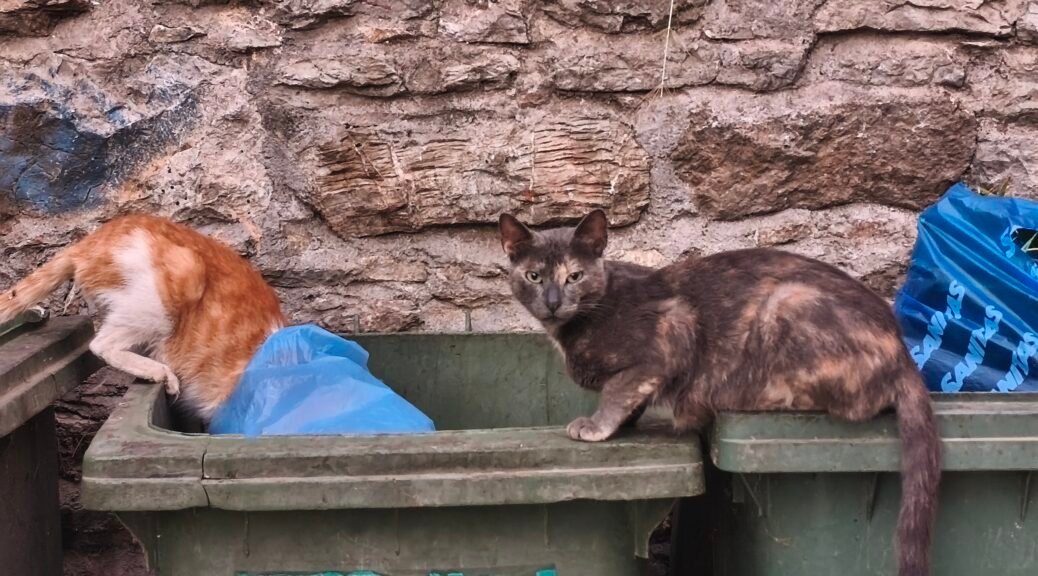
Now then, this is an emotive subject, but one that comes up every year at least twenty times in various social media posts, in emails and on the ground, and it’s cats. Not the musical, although I do have a story about that for you one day, but the animals, and in particular the stray cats. Not the American rockabilly band formed in 1979, but the feral cats of Symi. In a way, I don’t want to touch on this subject, because:
A) it’s bound to raise all manner of discussion and, frankly, my dear, I’m not that bothered. (Discussion can be a good thing among those who want to discuss it (not me), but please do it respectfully.
And B) I’m not best placed to offer advice, only my opinion. That opinion, though, is based on 24 years of living here 365 days a year.
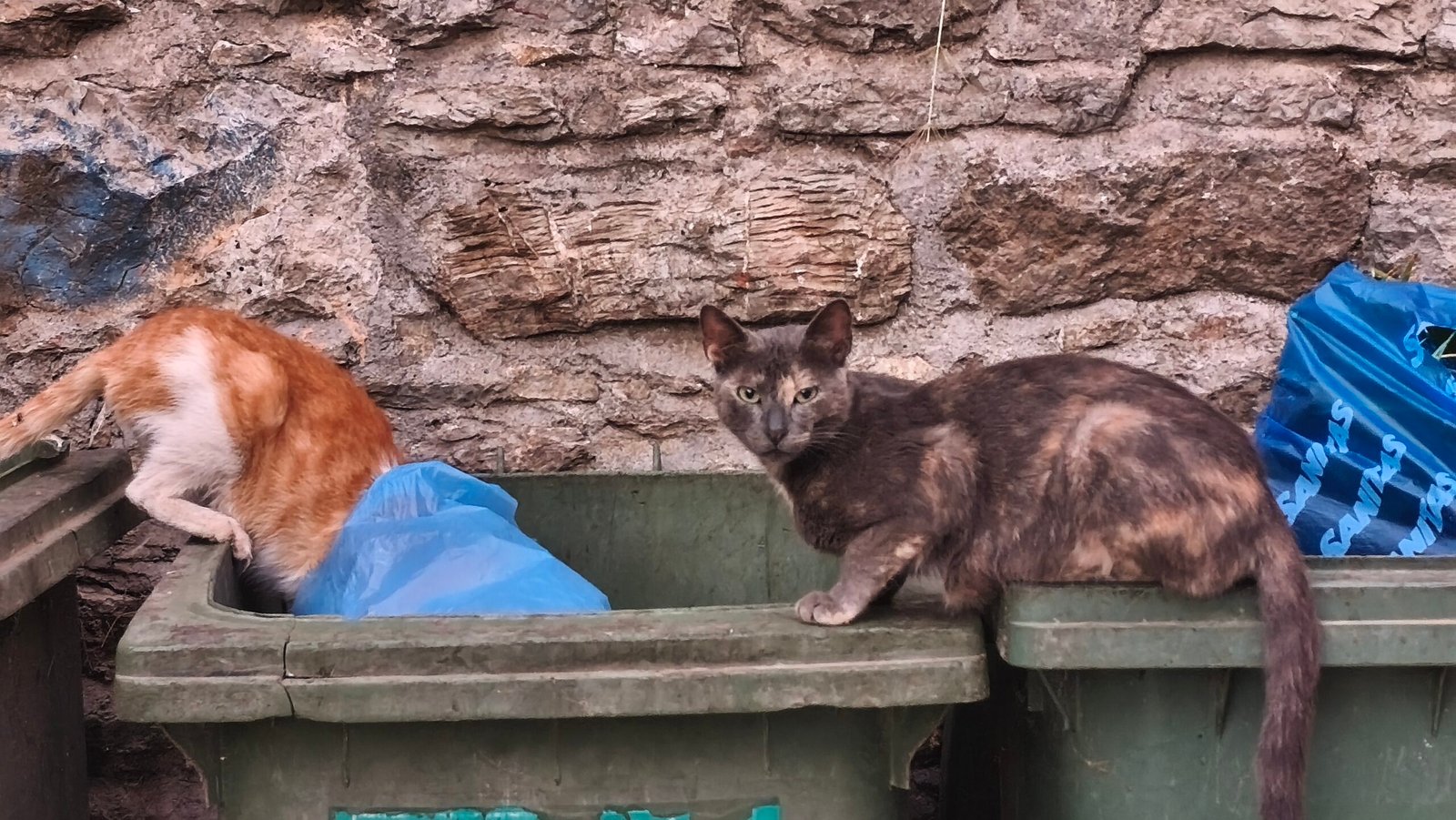
When we were on holiday here towards the end of the last century, we were soon adopted by a local stray cat who made so bold it used our accommodation when it felt like it. We put down water and some food, and put up with its constant coughing, temporarily naming it Furball. The reality was, it probably had lungworm or another medical condition we could do nothing about, and the other stark reality was that when we left, it returned to having to survive on its own, and was probably dead by Christmas. Cut forward 29 years, and we’re still surrounded by stray cats living at the bins, nearby farms, in the street, and wherever they can. Being cats, they breed and produce more, and being animals living in the wild, some survive, and some don’t. During the summer months, visitors come, ‘adopt’ them and do what they think is best to look after them. Then they go home — the visitors, I mean, and leave the cats to look after themselves.
This is fine. The cats adapt, even though it must have been quite a shock to the animals to be living off tinned food for a week or two, only to find it taken away once they have come to rely on it. But there you are; they are cats. They adjust. Once the season of misty-eyed visitors and the fruitfulness of their generosity is over, they return to doing what they can to survive, and they either do or they don’t. They have resources available, though, even in the winter. Local residents who feed them and, more importantly, put down water, a regular supply of bins to root through, vermin to catch as their nature demands, and places to find to keep warm – our laundry basket occasionally included. And, being cats, they keep breeding, and as nature arranges, they birth several more at a time, and before you know it, you’ve got far too many to survive, so a man called Megginson kicks in, and those that can ‘adapt and survive’ do so, while those that can’t, don’t. The truth is, as Herbert Spencer concluded back in 1864, it’s a case of the ‘survival of the fittest.’ (Before you put your hand up at the back there, both expressions developed from Darwin, but neither can be directly attributed to him.)
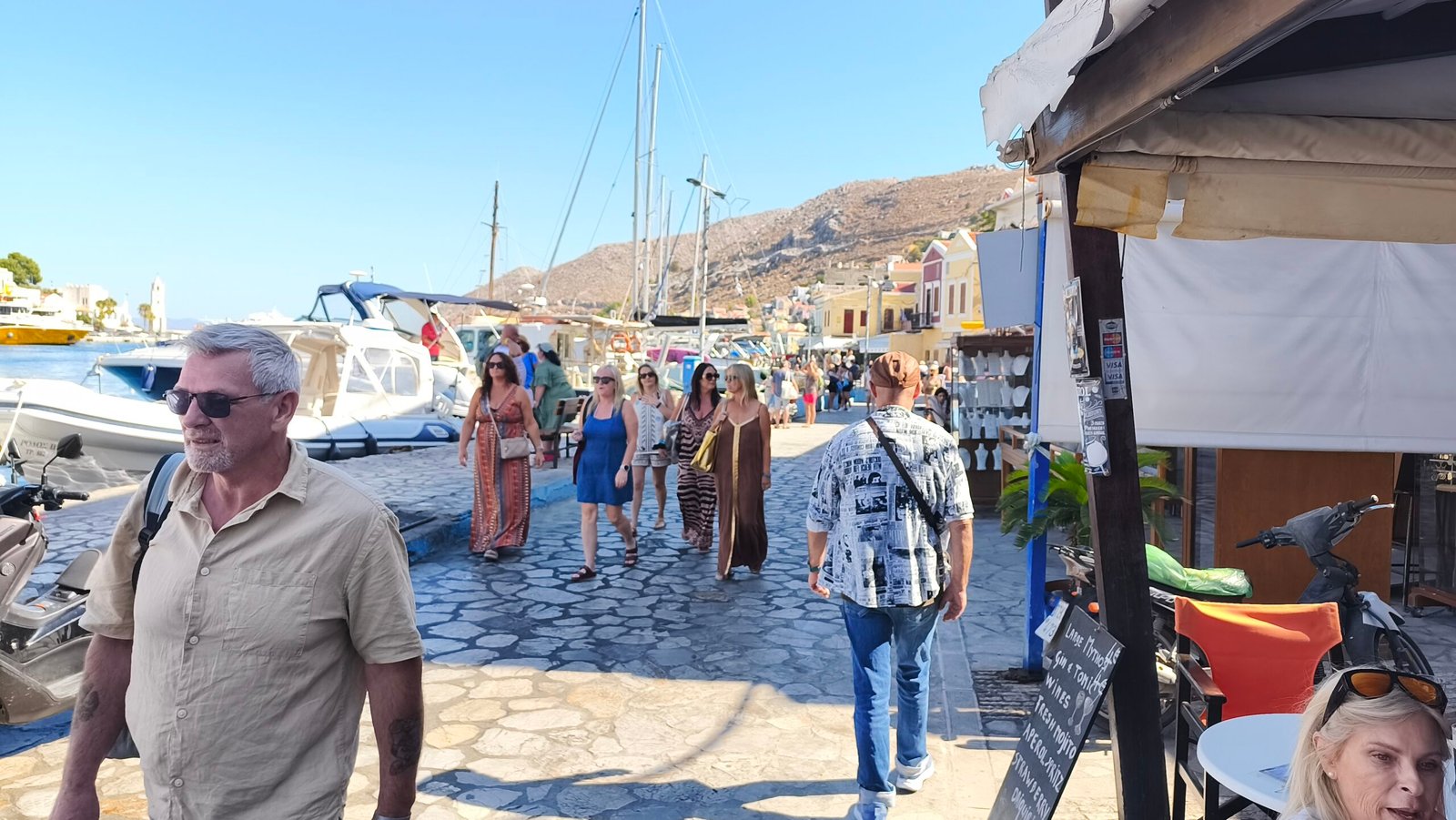
I’ve seen visitors commit some remarkable acts. These range from ordering an extra plate of Symi shrimps at dinner, asking for them as a takeaway, and then feeding them to the strays. (I can’t comment on this because I only ate them once and thought I’d have to be airlifted to hospital.) I’ve seen physically grown men lying on their fronts in the street trying to tempt a kitten to a slice of smoked salmon like the child-catcher in Chitty Chitty Bang Bang. We’ve seen people adopt a young kitten, arrange for all the necessary matters needed to rip it from its homeland and rehouse it in another corner of the world at great expense to the visitor and great discomfort to the animal (only for it to get mown down by a car not long after coming out of several thousand pounds worth of quarantine). And we’ve put up with tourists demanding that we, personally and municipally, do something about the disgusting condition of Symi strays, and why don’t we adopt every cute little kitten they found during their holiday, and we are all monsters for allowing it to happen, and no-one cares. I’m going straight to the mayor next time (good, do), I couldn’t find the pet shop open, they were on holiday. (How dare they, but, er… weren’t you?) There is no organisation to help them; there is, and there are. Keep asking around, and you will find it/them. (But don’t ask me, I’m so fed up with accusatory emails and remarks on the subject, I now barely reply.)
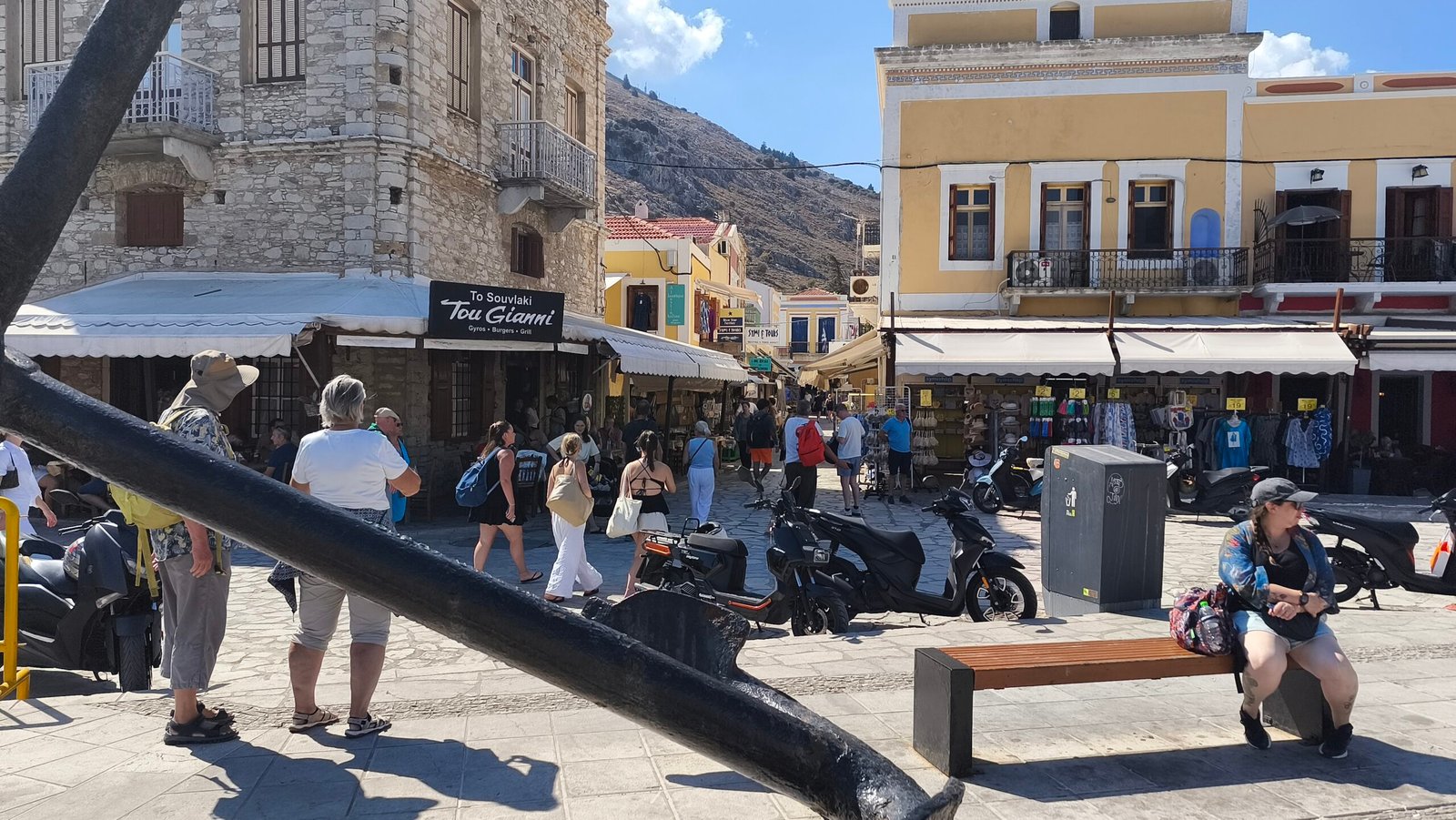
It’s all about expectations. At least, that’s what I concluded at four this morning when this came dripping from the top of my head. You’ve done well, saved, borrowed, or simply decided to use some of your finances for a never-cheap holiday on Symi, and you’ve brought with you your social norms from some well-off town or city where there’s pest control, and you stumble across a kindle of kittens, and OMG, isn’t that both the cutest and worst thing in the world! They have no USB-heated cushion, no cat house for nighttime, no collar or bowl with their names on them, and they are so adorable and cute, despite their ringworm, fleas and eye infection, and they each deserve a home with heating and care, pampering and fluffiness because that’s what you can afford to do to your pets back at home. Yeah, nice dream, but sadly, that’s your view of cat life, and not the reality of a small island struggling to make it through the rest of the year. Come winter, the animals will be left to get on with it, cared for as best they can by local volunteers, but otherwise left to fate, the occasional rat poisoning (illegal, but then so is driving without a crash helmet – ever done that in Greece?), the eagles (not the rock group), and other natural and unnatural ends. Your two weeks of feeding, fussing, fuming, while trying to make their temporary lives better, worrying, complaining, doing something, and generally being nothing more to them than a source of food, come to an end. You can leave, but just as you can’t leave behind your kindness, you also can’t leave behind your judgement on what comes after you. It’s island life, love. If you can’t do what you want to, then you do the things you can.
Anyway, I didn’t intend to waste an hour on this, but pick it apart (I agree, it is rather muddled, and I would rather tell you the Cats story), think what you will, do what you can, but please, put the brakes on the criticism. When temporary visitors throw down their ‘this is what I would do about it, therefore, this is what you should do’ on us who are permanent, I switch off and say, yes, dear. If you feel that strongly about stray cats, I suggest you sell up, move here, and get on with it. Otherwise, as Napoleon says to Lafayette in The Aristocats, ‘Hush your mouth.’