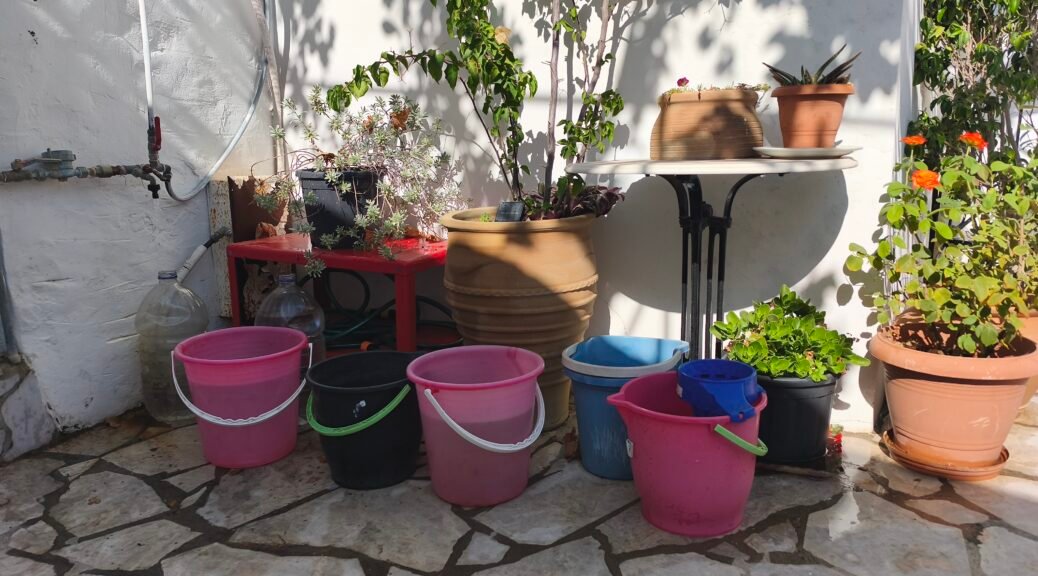
I read a very good point on a social media post yesterday, and it’s the kind of thing people are talking about privately, but not many have aired publicly. It relates to one of my personal bugbears, and it’s tricky to bring up, because it can sound like you’re ‘having a go’ at others who are only trying to get by. It’s also an age-old issue for the island, and something I’ve bleated on about before; the water situation. More precisely, the lack-of-water situation and the rise of Airbnb accommodation.
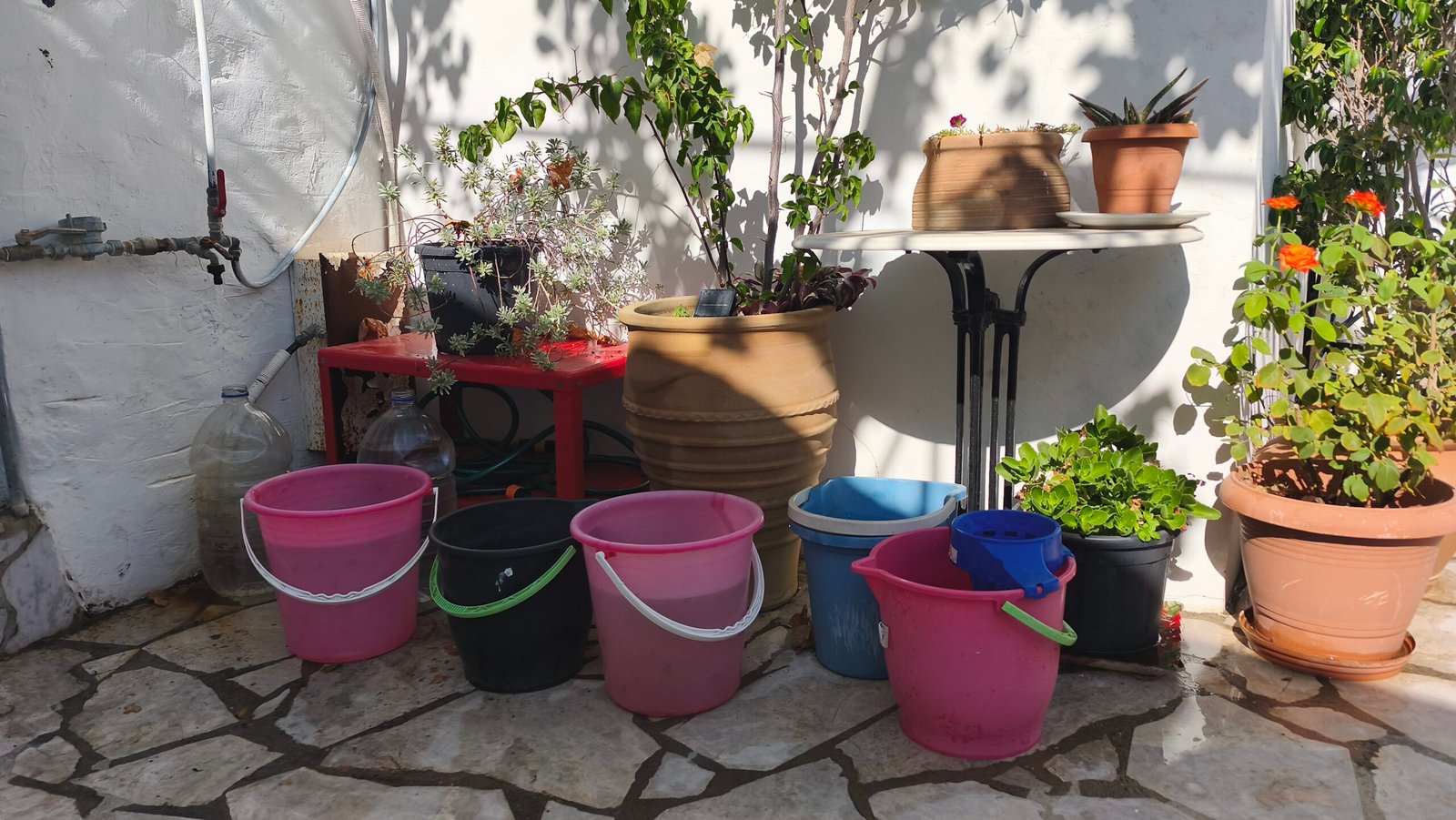
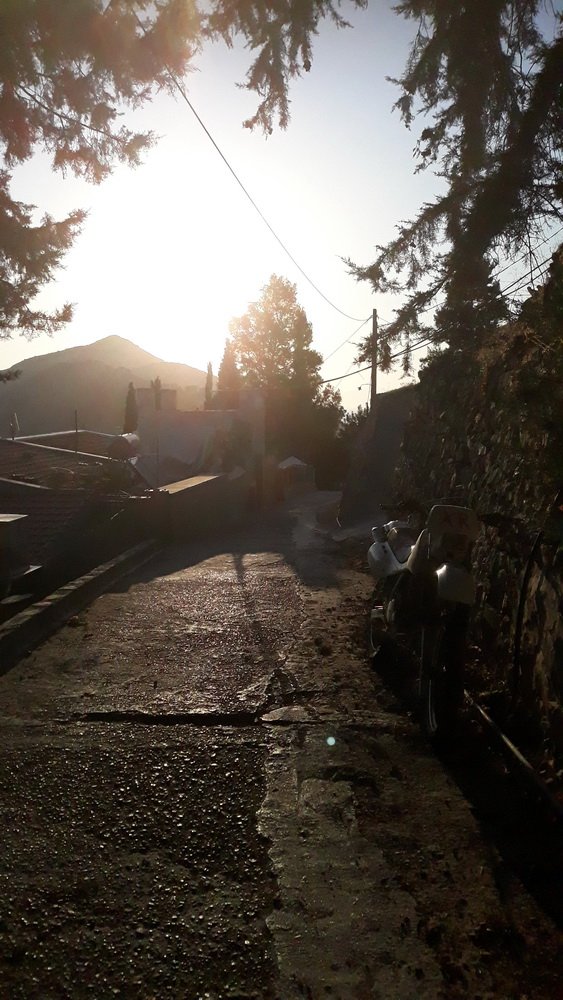
On July 16th, Reuters published a headline, ‘Greek islands face drought as tourist season hits,’ and said: Seven Greek islands in the Aegean Sea have declared drought emergencies this year to preserve water as climate change makes summers hotter and rainfall more erratic. Feeding from this, other publications listed the islands, and Symi is among them, so we’ll focus on that – and intersperse this 5.00 am ramble with random photos to break up the heavy text.
There isn’t any natural water on Symi, save for some underground springs, which tend to have church complexes built over them. There is also at least one natural ‘pond’ that I know of, and that’s up in the disused farmstead above Pedi. We have the desalination plant which, as far as I understand it, was meant to serve only a small part of the island, but now must cover all of it. Something built to serve 25% of something and then spreading itself over 100% isn’t going to work, and its upkeep and success are a bone of contention hereabouts. I don’t know all the details here, but it’s been apparent for a long time that the facility isn’t up to the job; brown-orange water sometimes, salty, not drinkable, and the place has caught fire at least once due to lack of water in the cooling system.
I’ve heard people say, ‘But last winter was the wettest for ages. Where is all that water?’ Hey, a pint pot will only ever hold a pint, and you can’t force more rainwater into a reservoir once it’s full, so no matter how much it rained, the island can only collect so much. And I’ve not seen a water boat for years. Gone are the years when residents would collect winter rain in the sternas and butts and then make it last until the next rain – or are those years coming back to us now?
For those who don’t know, parts of the island, such as where we live, only have the mains taps open and flowing between roughly 08.00 and 12.00 on three days of the week. Other places have the mains open 24/7, which seems unfair. When I recently asked if we could have 24/7 water like others near us, I was told no, because we ‘are on a different tank.’ More recently, there were supply problems in another part of the village. There always have been.
But the weather, lack of water, boats and the desalination plant are not only to blame. The point raised on social media was a simple one, another facet of the problem, and one of those double-edged-sword issues: tourist accommodation. The island needs tourism so it can survive. It’s the modern equivalent of the sponge diving, trade, and boat building industries of the island’s history – and look what happened to them (over-fishing and chopping down all the trees to feed the boat building until there were no more trees to fell). However, the recent trend towards turning your granny flat, ruin, old shop, old storeroom and anything else with four walls and a roof into Airbnb accommodation is becoming the new over-fishing and tree felling. The modern tourist now comes with a sense of entitlement because only the wealthy can afford to travel to over-costly islands like Symi, and the cheap package deals of the past are few and far between. When a particular and growing type of tourist arrives, it seems, not only do they want modern fittings, all the mod cons, air conditioning and other home comforts, they also expect constantly flowing water 24/7. A shower on waking, a small wash load of a string bikini, a pair of Speedos and a towel surely won’t take much water in the machine? Oh, and a dishwasher would be nice, because they don’t use much water. (Maybe not, but they use some, and these days, some can be too much.)
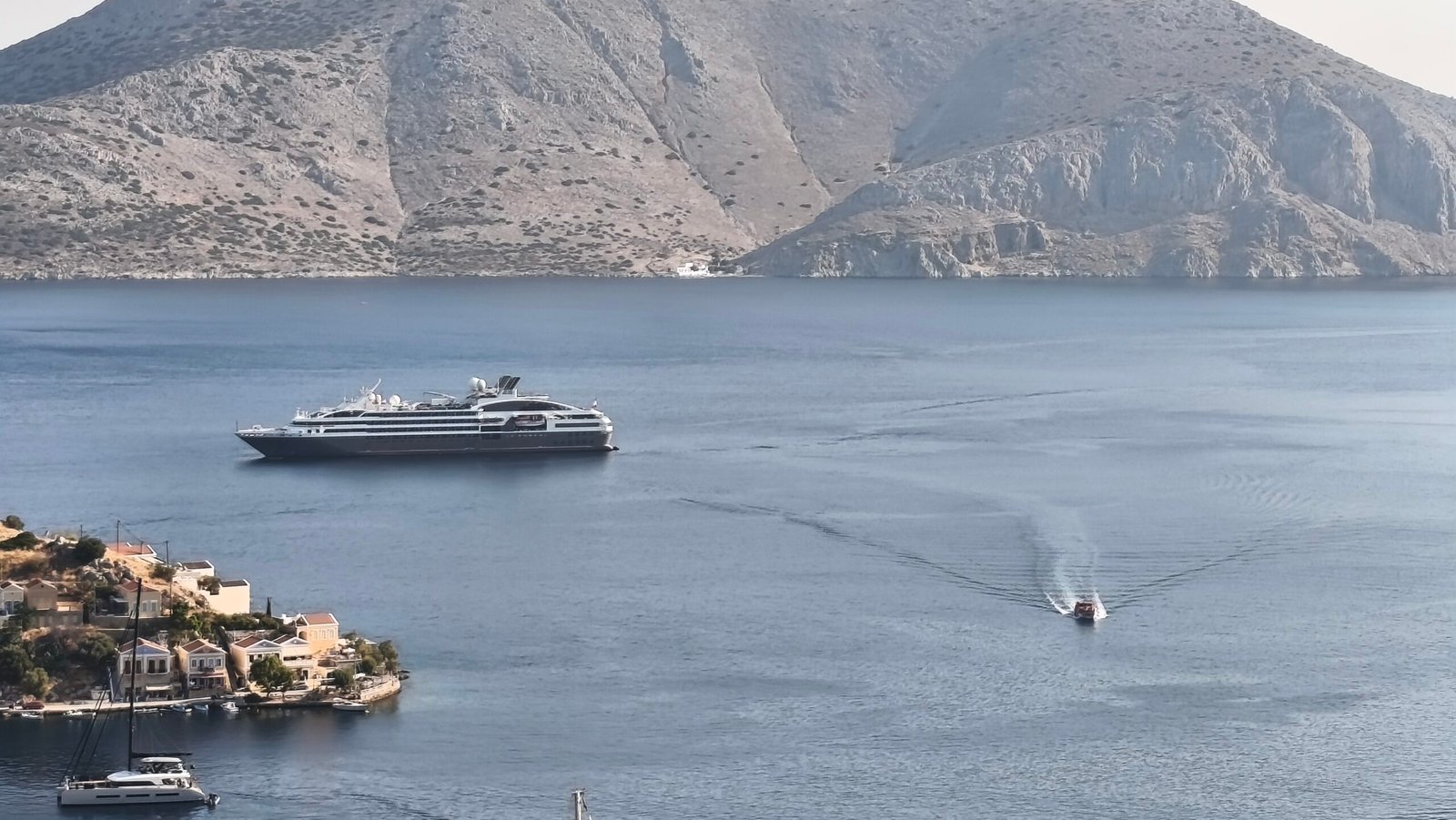
Another issue mentioned was the way visitors arrive at these old cupboards and cowsheds, now souped up to take top billing on websites and get a mention in a glossy rag. Sometimes (*but by no means always), the visitor is treated to the adventure of finding their own way from the boat to the accommodation and ‘What a challenge that was, Tarquin. We had to carry our own luggage! No, it is all part of the authentic Greek experience. It was so rustic and old-fashioned, but the kitchen units came from Ikea and the homeware from Jysk, so we coped.’
What these unaccompanied arrivals are not told are the laws by which most islanders must live if they want any water at all:
Shower on, get wet, shower off, get soaped, shower on, soap off, done. That, for me, takes about the same amount of water as a bowl of washing up. (Actually, a little more because we only half fill the washing up bowl.) No washing one or two items in a 60° wash, leaving it running while you spend your holiday money on a sunbed. Only flush the toilet when there are things floating in it, not every time little Ophelia does a tinkle. Don’t leave the tap running when you clean your teeth. I don’t even wet the brush; simply add the toothpaste, brush teeth, rinse brush and mouth while washing face, and turn off the tap asap.
I can’t imagine that many privileged visitors think to do any of these things when left to their own devices in a property they have paid over €120 a night for. ‘I paid for it, I can do what I want, and everything else is someone else’s problem.’
Sadly, that is the way the influencers of the world are running the planet, but anyone living here permanently will tell you that kind of thinking ain’t going to get you far for long.
There are climate issues, Gawd, yes, and most, if not all, governments around the world pay lip service to correcting them while knowing the only way they can survive the future is to ignore them and invade another country to grab what they have.
But here, as elsewhere, there are over-tourism issues, and the rise of the plague of Airbnb quick-cash accommodation is making it worse, as are other things the municipality might be offering such as: posh marinas for posh boats who, though they pay, use massive amounts of fresh water to clean down their chrome. Pay for it, fine, but replace it? How?
Constant building work doesn’t help; the never-ending job of converting much-needed local housing into three-months-of-the-year tourist havens, that takes water too. I could go on and still not come up with an answer to the problem.
Sadly, as happened with boat building and sponge diving, prosperity will, in time, become the curse that kills itself. Owners will realise that with Airbnb now coming under stricter rules (that are, thank Gawd, being more strictly enforced), and the cost of running them outweighing the quick ‘n;’ easy profit they thought they could make, may lead to a tempering of the plague, but it will not be the cure. The island still needs some way of sustaining the residents who live here all year round, and we clearly can’t rely on rain as we once did. So, what’s the answer?
I’ll let you discuss that one.